Bang for your buck: The need for impact assessment

When the UK rolled out its performance-based research funding system in 1986, the country was facing economic turbulence, and growing constraints on public funding led to policies that called for greater accountability. The funding system, now called REF, did just that. It introduced accountability among universities by tying funding to how universities performed and also informed the strategic allocation of limited resources.
In 2014, impact was introduced as a metric with the aim of putting in place yardsticks to measure the impact of research outside academia. Before this, academia in the UK worked under the assumption that basic research would eventually benefit various aspects of society and scientists were never accountable for showing evidence to show impact. With the introduction of the impact agenda and with funding depending more on research impact rather than research output, academia was compelled to showcase the value research has to society. It was widely believed that tying funding (worth around £2 billion per year, according to REF) to the impact the research showed was a strong performance incentive for universities and researchers to contribute to the development of a world-class research base in the higher education sector and the only way to improve research excellence in the UK.
The REF defines impact as “an effect on, change or benefit to the economy, society, culture, public policy or services, health, the environment or quality of life, beyond academia” (re.ukri.org). The phrase “beyond academia” is critical in understanding the thrust of REF. This is distinct from academic impact, or the impact factor of journals, which are not relevant to impact in REF terms. The main objectives of the REF are
- To inform the selective allocation of funding for research
- To provide accountability for public investment in research and produce evidence of the benefits of this investment
- To provide benchmarking information and establish reputational yardsticks, for use in the higher education sector and for public information. (re.ukri.org)
Qualitative versus quantitative
The REF was a pioneering method for evaluating institutional performance based on performance metrics and expert evaluation. Hong Kong, Australia, Canada, and some Scandinavian countries have adopted similar frameworks for the evaluation of university performance, but what sets REF apart is the high weightage given to the impact the research has had outside academia (20% in REF 2014 and 25% in REF 2021) and peer evaluation being a key method.
The REF’s use of subjective evaluation is consistent with the view that expert assessment should supplement quantitative indicators (Hicks et al., 2015). However, this approach has not found many takers. Denmark, Finland, Sweden, and Norway have stuck to quantitative indicators to decide funding allocation, mainly for reasons of cost, but also because they do not see the merit in tying funding with peer-based research evaluation. Sweden and the Netherlands, for example, are allowing its universities to run a research assessment exercise independently and with the help of internal panels of experts, with the assessment not having any funding implications.
A global movement
There is a global trend towards competitive funding with countries using performance-based metrics to govern institutional funding. Hong Kong and Australia have taken the UK’s lead and introduced their own research impact frameworks to govern fund allocation to universities (Australia’s Engagement and Impact Assessment was started as recently as 2018. You can find impact case studies here.) These evaluations are taking on a global scale and are helping establish a bilateral relationship between universities and society. Universities are now investing in previously unheard of roles like “impact officer” or entire teams dedicated to curating evidence on research impact. Universities are also expected to divert financial resources to impact-generating research and review their communication with society. This has led to the development of impact support into a professional space, with protocols, training programs, and conferences and workshops being dedicated to understanding the meaning and importance of impact.
A high REF rank can also impact the reputation of the university and consequently of research groups or individuals who have contributed strongly to their institution’s REF score. In a country like China, which is aggressively pushing its universities to pursue the agenda of becoming highly reputed institutions globally, a framework like REF may be just what it needs.
The way forward
The idea of universities proving research impact, and more specifically the UK’s version of it, has come in for some criticism. Critics have pointed out that the pressure to prove impact beyond academia has taken the focus away from the research itself and narrows the choices for research. Others have taken issue to funding being dependant on something as subjective as “importance” or “impact” of the research. Academics generally accept that the measurement of impact varies greatly between disciplines, but can the impact of a medical breakthrough that could save lives ever compare with a novel finding in the arts? A University of Leicester piece on impact nicely sums up the conundrum: “How to evaluate the cultural impact of historical research, the societal impact of political research, or the economic impact of medical research…is one of the biggest challenges associated with the impact agenda” (University of Leicester 2020). It’ll be interesting to see how researchers, universities, funding bodies, and think tanks behind these frameworks can work together to address these criticisms.
The consensus outside academia seems to be that scientific endeavours ought to reap benefits for society. The REF and similar frameworks ensure that universities at least are aligned with this view. With financial support for certain sectors of academia and education being curtailed—in 2015, Japan came in for criticism for slashing funding for the humanities and social sciences (The Guardian 2015)—more countries will be compelled to adopt similar frameworks to inform the allocation of resources. What remains to be seen is whether these countries implement a framework closely modelled on the REF or if they will adapt a modified version that takes into consideration the country’s socio-political and economic landscape. The UK spent £246 million on REF 2014—a number that most low- and middle-income economies may balk at.
In the context of the UK, we also need to watch how Brexit affects the structure and implementation of the REF—Will a financial drought spell doom for university funding or will universities and funding bodies come together to find an innovative way out?
A quick guide to measuring impact under REF

UK universities vying for funding need to send in their submissions under one of 34 subjects or units of assessment (UOA) spanning disciplines like economy, society, culture, policy, health, environment, and quality of life. These submissions typically contain details on the quality of the journal articles, books, monographs, and other research outputs they have produced; case studies detailing the impact of their research on the outside world; and auditable evidence in the form of testimonials, survey results, financial data or any of a wide variety of ways of backing up the statements made in the case. Only a subset of a university’s research is expected to contribute to a case study: a small university might be required to submit less than 20, while a large one might have to submit over 100.
The submissions are assessed by an expert sub-panel for each UOA, working under the guidance of four main panels, which oversee the assessment to ensure the assessment criteria and standards are consistently applied.

Source: www.ref.ac.uk/2014/
Drafting the case study
REF submissions comprise two sections: Section A seeks details like name of institution, staff involved, and period when impact occurred. Section B, which forms the meat of the case study, includes the following:
- A summary of the research impact (100 words)
- A brief description of the base research (500 words)
- Related literature (6 citations)
- Details of the impact (750 words)
- Evidence to corroborate the impact—these can be either published sources or statements from organizations/individuals (10 sources)
Universities are required to provide what the REF calls “additional contextual data,” which is used in post-assessment evaluations and is to be provided separately from the five-page limit.
The template is standardized—staff members involved, for example, need to be listed as opposed to their contribution being described in free text—and the REF office has prepared detailed guidelines on how the case study and accompanying evidence needs to be provided, thus making the submission process simple yet detailed and watertight.
Scoring
Identifying the right case studies is essential, as it affects the score a university may receive. Jo Lakey, REF Delivery Director at King’s College London, sheds some light on the process and factors to be considered when narrowing down on case studies:
“There are some disciplines, like physics and math, where it’s more difficult to show evidence of impact outside academia. Impact accounts for 25% of the assessment score. If you have two case studies, they’ll be worth 12.5% each. If you have 10 case studies, they’ll be worth 2.5% each. During the assessment phase, they’ll be given anywhere between four stars and one star or even be unclassified, and the scores will be put together to create the profile for the university.
Let’s say two case studies have been submitted under Unit of Assessment A and ten case studies under Unit of Assessment B. Both case studies under Unit of Assessment A get four stars. That would make the impact score 100% four stars. Under Unit of Assessment B, five of the ten case studies get three stars (50% three stars) and the other five get two stars (50% two stars). It’s safe to conclude that Unit of Assessment A with two case studies has done much better than Unit of Assessment B with ten case studies. The larger the unit of assessment, the more cases you have to submit and the higher are the chances of you getting a range of scores rather than 100% four stars. That’s why you need to invest a lot of time preparing, making sure you’re submitting your best possible case studies.
There’s no transparency around the score, so it’s difficult to identify the high-scoring case studies. The score is mentioned in your profile. If the profile has 100% four stars, it’s clear that all the submitted case studies got four stars, but if the profile has 25% four stars, 50% three stars, and 25% two stars, you don’t know which case study got which score.”
References:
- “REF Impact,” Research England, accessed October 27, 2019, https://re.ukri.org/research/ref-impact/
- Hicks, Diana, Paul Wouters, Ludo Waltman, Sarah De Rijcke, and Ismael Rafols. “Bibliometrics: the Leiden Manifesto for research metrics.” Nature 520, no. 7548 (2015): 429-431.
- “Measuring Impact,” University of Leicester, accessed October 27, 2019, https://www2.le.ac.uk/offices/researchsupport/impact/measuring-impact
- Dean, Alex. “Japan’s humanities chop sends shivers down academic spines.” Last modified September 26, 2015. https://www.theguardian.com/higher-education-network/2015/sep/25/japans-humanities-chop-sends-shivers-down-academic-spines
Impact Case studies

Case study1: Improving access to Mental health care in low- and middle-income countries (London School of Hygiene and Tropical Medicine)

Research summary
In low- and middle-income countries, more than 20% of all disability related to health conditions is caused by mental health problems. This study, carried out between 2000 and 2012, tried to achieve three things:
- Showing the burden of mental health problems in low- and middle-income countries. This was done by carrying out a systematic review of the burden of and cost effective treatments for mental disorders, a pan-India survey of suicide mortality, population-based surveys across 60 countries that examined the association of depression with other chronic conditions; studying the association of mental health issues with maternal and child health and chronic physical health conditions, and examining the cycle of disadvantage, social exclusion, and mental health problems.
- Showing that effective treatments can be provided in low-resource settings like India by non-specialist healthcare workers
- Showing the paucity and inequitable distribution of mental health research resources and outputs
Impact summary
The research had significant impact on several areas of mental health care.
- Policymaking – In 2008, thje WHO launched an action plan to scale up services for mental disorders. This led to a 2013 WHO resolution for a Comprehensive Mental Health Action Plan. In 2011, the Ministry of Health in India set up a group to write India’s first mental health policy and make recommendations for the scaling up of mental health care in the country.
- Coalition Groups – In 2008, the Movement for Global Mental Health was launched with the aim of improving services for people with mental disorders worldwide.
- Increased Resources – Associations like Grand Challenges Canada and the US National Institute of Mental Health have pledged over USD 15 million towards innovations and partnerships between researchers and policymakers to address mental health challenges.
- Agenda – International agencies like the World Federation for Mental Health have aligned their global agenda on the basis of the research evidence.
- Education – Several leading international universities like Duke and Harvard have set up teaching programs in global mental health.
Resource: https://impact.ref.ac.uk/casestudies/CaseStudy.aspx?Id=41456
Case study 2: Animal Protection: Ethics and Politics (University of Leicester)

Research summary
The use and treatment of animals in the provision of our food, clothing, and other raw materials, as well as in the areas of medical research, sport, and entertainment has invited public debate, with both sides making strong, passionate appeals for the continued use or the complete ban of animal use.
Professor Robert Garner’s research, since 1995, has sought to explore how adopting different positions within the animal ethics debate influences the treatment of animals. He particularly makes a distinction between animal welfare as a scientific endeavor and as an ethic. He also advocates a strategic position called Animal Protectionism or New Welfarism, which combines a consideration of ethics and political possibility. It seeks to counter those who claim that certain uses of animals, irrespective of how the animal is being treated, is illegitimate morally and should be abolished. Instead he recommends an approach where the animal does not suffer during its use and thus allows for the continued use of animals as a source of food and as subjects of scientific experiments.
Impact summary
Professor Robert Garner’s research has provided a springboard for political debate and decision making. It has facilitated debate that has brought about change in key areas of animal welfare such as the use of wild animals in circuses in the UK and whale hunting. His arguments compelled the Department for Environment, Food and Rural Affairs (DEFRA) in the UK to introduce a stringent new licensing scheme aimed to ensure the welfare of wild animals in circuses. The International Whaling Commission (IWC) has taken note of Professor Garner’s work and altered its conservation policy to improve the design of an important regulatory machinery for protecting the natural environment of whales.
His work has been disseminated through radio interviews, podcasts, newspaper articles, and other media. He has also given talks and lectures worldwide, which have been attended by activists and academics.
Professor has played an important role in the creation an development of the Centre for Animals and Social Justice, a think-thank created to focus on academic research and advocacy in animal protection public policy.
Resource: https://impact.ref.ac.uk/casestudies/CaseStudy.aspx?Id=40445
Case study 3: Equal human rights for same-sex couples and parents (King’s College London)

Research impact summary
Before the early 1990s, the legal situation for same-sex couples and parents in Europe, the USA, and Canada was grim. Same-sex couples could register their relationship only in Denmark, and discrimination against them was commonplace. In 1993, Professor Robert Wintemute started engaging in research on discrimination based on sexual orientation and legislation denying gay and lesbian individuals or same-sex couples the same rights as heterosexual individuals or married/unmarried different-sex couples.
Professor Wintemute developed a conceptual framework for analyzing such discrimination, which argued for international human rights treaties and national constitutions that allowed for such discrimination to be treated along the lines of discrimination based on race, religion, or sex. His research output is captured in works that are now considered key texts on the subject.
Impact summary
Professor Wintemuth’s research has contributed to campaigns for legal change and has influenced the development of human rights laws. He used his research to argue against such discrimination in international human rights courts.
He partnered with ILGA-Europe and, by doing so, facilitated an academic-NGO partnership by opening up a whole new field of activity, strategic litigation. He has contributed to 9 interventions submitted by ILGA-Europe to the European Court of Human Rights. These interventions have persuaded the Court to adopt anti-discrimination principles and the judgements passed serve as useful precedents for lawyers and NGOs around the world when seeking legal reforms from national legislatures and courts. Professor Wintemuth’s litigious efforts, with a strong foundation in his extensive research, has led to rulings that, for example, extend to unmarried same-sex couples the same rights as those given to unmarried different-sex couples; permit lesbian women, gay men, and same-sex couples to adopt children; and extend to same-sex couples the same alternatives to marriage that are created for different-sex couples.
Resource: https://impact.ref.ac.uk/casestudies/CaseStudy.aspx?Id=41247
How does the research benefit society

“How does your research benefit society?”
“I do not quite understand the question. What does it mean?”
This famous exchange between Takaaki Kajita, a professor at the University of Tokyo and a Nobel laureate in Physics, and students at an event after his Nobel win received widespread attention online, and many researchers expressed agreement with Professor Kajita.
I remember the incident well. I have personally interviewed Professor Kajita and I asked him about it. “Basic research does not aim to benefit society in a visible way,” Professor Kajita had said. I agree with this view. It’s a widely accepted opinion that pursuing the truth is the primary intent of a researcher, and if one wants to create something that will benefit the world, one should become a researcher in the private sector.
However, given that many countries today fund universities with large amounts of public funds and invest in academic activities as well as scientific and technological development, it is not untoward to expect academia to give back to society. In previous issues of Blank:a, we have covered Asian universities that deal with various challenges such as increasing the research output in terms of number of papers, raising the university ranking, increasing patent revenue, and conducting more joint research. For this issue, we decided to explore the university landscape in the UK.
There are around 160 universities in the UK, almost all of which are national universities. As they are publicly funded, the subject of whether they have a responsibility to give back to society has sparked intense debate. Universities in the UK have now come under more rigorous scrutiny, and the government has implemented policies compelling them to introduce reforms.
The UK’s impact assessment mechanism has set a precedent where the government urges universities to bring about reform in a specific manner in response to the demands of society. Impact
assessment is not necessarily about compelling researchers in every field to create a social impact—a view that kept resurfacing in our interviews with impact officers. Rather, it carries the government’s intent to produce a culture shift in academia, which includes researchers being mindful of the social impact when conducting research activities with the end goal that researchers and universities are perceived as entities that contribute to society.
We interviewed impact officers from four universities in the UK and the following themes were found to be in common with all of them:
- Despite being a completely new initiative, impact assessment has been accepted by many universities.
- They felt that the universities’ attitude has changed because of this initiative.
- The impact officers were passionate about doing good work with university researchers.
Changing the culture of a university is a major undertaking that has its challenges. We must applaud the UK government and university staff who undertook such daring reforms despite knowing the risks of introducing impact assessment.
I have met various researchers from numerous countries, and in every country I have visited, I got the impression that universities are considered sacred institutions. The UK government’s call to researchers to show how their research contributes to society is truly innovative. Australia and Hong Kong have followed in the UK’s footsteps and have introduced an impact assessment framework. This is likely to become a global movement. In September 2019, I conducted a seminar on impact assessment at an event in Japan; the topic stoked interest in quite a few members in the audience. Judging by the trend worldwide, it will not be surprising
If, at some point, a similar system is introduced in countries like Japan, South Korea, and China where the volume of research is the highest in Asia.
If relatively unknown research is explained in a manner that is accessible to the general public and if its social impact is understood, the public’s support for the research is likely to increase, and the research is likely to attract financial support in the form of donations and research grants. People who currently frequent a university campus for a short period may find reasons to spend more time there as the university will have a lot more to offer. Stanford University has become a launchpad for startups in the United States. In the same way, research and society may become more connected through information, and there may be more universities that become known for a unique characteristic as they attract more people outside of academia.
Impact assessment may help answer the question “How does research benefit society?” As captured in this issue, the cases that underwent an impact assessment showed impact in areas that are not easily comprehensible, such as economic impact and medical development, and impact was seen in the state of affairs, mentality, behavior, and people’s knowledge. One of the impact officers we interviewed said, “Every researcher always considers the significance of the research when formulating a research plan. That is the starting point of the impact of their research.” Another impact officer noted, “Following the introduction of impact evaluation, it became a norm for researchers to debate social impact when discussing a research plan. That in and of itself is a major impact.”
If we consider impact in a broad sense, can we not argue that all research offers some benefit, albeit in different forms? We need to wait and watch how this initiative, which started in the UK, spreads across the globe. I would like to see how Hong Kong and Australia implement their versions of impact assessment in the long run.
5 initiatives from universities around the world that caught our attention in 2019

A university’s reputation nationally and internationally is closely tied with its performance in research and academia. A major contributor to a university’s reputation is its research output and the impact the research has in the real world.
Here is a list of 5 top research projects from universities around the world that made waves in 2019.
1. The Royal College of Music (RCM)
RCM is trying to address health problems among musicians. The Musical Impact project surveyed a combined network of over 1,500 musicians, scientists, and health professionals. Nearly 80% reported pain in the upper body, and stress management, sleep quality, and health management were lower than expected. In response, the Centre for Performance Science (CPS), a joint initiative with Imperial College, created Healthy Conservatoires. This is an international network bringing together stakeholders from across the performing arts to support health and wellbeing. The network meets twice a year and has over 150 members who share a vision to support and promote health and wellbeing among performing artists.
2. University of Plymouth

University of Plymouth is leading a project to address the loneliness and mental wellbeing among the elderly residents of Cornwall, a county in South West England, by installing Amazon Echo Spots for use within care environments. The university aims to install 150 devices in care homes. These homes and domiciliary patients will be linked with a team of 15-20 Digital Health Champions who will support them in using the devices. The devices can be tailored to the needs of the user and the environment, but broadly they could be used for setting up treatment and medication reminders; video communications among health practitioners, family, and friends; and enabling interaction with age-appropriate media, for example, sound media suitable for their age/interest. The project paves the way for not only reducing loneliness and enabling better connection with families; it will also help reduce demands on the health and social care system within the region.
News Source: https://www.plymouth.ac.uk/news/smart-speakers-project-to-advance-elderly-care-across-cornwall
3. Seoul National University (SNU)

SNU has consistently filed a high number of patents over the last decade and is frequently lauded for its research quality. It was ranked #1 by Reuters in its 2019 list of Asia Pacific’s Most Innovative Universities. Among SNU’s latest research is a new “lipid nanotablet,” a significant innovation in the development of ultra-small bio-based computers. The structure of the device resembles the membranes of living cells, and computing is performed by nanoparticles bonded to pieces of DNA.
News Source: https://www.useoul.edu/research/highlights
4. National University of Singapore (NUS)

Researchers at NUS are developing an artificial intelligence system that can improve the cognitive performance of students. The platform, called CURATE.AI, creates individualized profiles and builds training programs customized to each person’s learning habits; researchers say it not only improves the efficiency of training programs, but can help prevent cognitive decline in older users. In May, NUS signed an agreement with Duke University to promote joint research and development activities between the two universities. The collaboration will focus on global health, public policy, and innovation and entrepreneurship.
News Source: https://www.eurekalert.org/pub_releases/2019-05/nuos-nps052219.php
5. Tokyo Medical & Dental University (TMDU)
Researchers at TMDU are using stem cells to reverse the damage caused by inflammatory bowel diseases (IBDs) such as Crohn’s disease and ulcerative colitis. The university has also partnered with TDK Corp to come up with the world’s first measurement and visualization of cardiac activity using magnetoresistive sensors – a technology more commonly used in the read heads of hard disk drives.
News Source: http://www.tmd.ac.jp/english/research_activities/Vol-4/features/f_3/index.html
PATENTS NEED PRESS RELEASES TOO! INTRODUCTION TO PATENT JOURNALISM

Science news portals like Phys.Org, EurekAlert, Science Daily, and Science Magazine have a common function: they popularize novel and interesting research through science press releases and news articles. At the same time, research is moving away from the traditional approach of austerity to a more impact-based, real-world application-oriented approach. This has led to an increasing number of new technologies and products arising from such research, which get patented to realize a commercial advantage over other competitors in the same field. But suppose a new patented product or technology is developed and it needs to be “out there” advertised in the best possible manner so that its advantages and impact are abundantly clear.
Media coverage of patents via written press releases or other formats—called patent journalism—is fast gaining traction as an essential form of science communication. Patents need press releases because, apart from helping create economic value, they can also be a powerful medium of communicating scientific and technological advances. But what constitutes good patent journalism? How is it different from the science news we consume every day? With research organizations increasingly adopting innovation-based approaches, a number of universities like NUS (Singapore), University of Tokyo (Japan), and Chung-Ang University and the Ulsan National Institute of Science and Technology (South Korea) have started churning out patents and patentable technologies. Therefore, it is of tremendous importance to understand the workings of patent journalism.
A well-written press release for a patent typically includes
- Announcing the patent and short introduction (Who, What, Where, When)
- Patent number, patent issuing office – provide links if possible or product name (What)
- Short description of the patented technology/product (How, Why)
- Benefits of the patented technology/product: why the technology is exciting or pathbreaking and how the company is a pioneer of industry technology (Why, So What)
- Quotes from the CEO/President/MD
- Quick introduction to the company (what it does) and its market share/penetration/customer base/revenue/product portfolio (in the context of the patented technology)
- How many patents does the company already have
- Description of other similar/related patents held by the company
- Concluding remarks (Implications, application, benefits)
Here are two excellent patent journalism pieces: an announcement of a USA Technologies patent for a cashless e-payment vending and an announcement of a novel live-attenuated influenza vaccine by Vivaldi Biosciences Inc., which includes a modified viral NS1 gene. Both press releases do an excellent job of providing factual information and allow the user/reader to follow up for more information unlike most patent press releases that only harp on the perceived benefits of the product or technology and fail to provide actionable information.
To conclude, here are a few practices for patent journalism:
- Include the patent number
- Mention the patent issuing office
- Provide an explanation of the technology instead of relying on the perceived benefits of the technology
- Talk about the company’s current patent portfolio
- Check the assignment and license of patents between parties. Often, a research institute licenses a patent to a company that can commercialize the product/technology. In such cases, both the parties (e.g., Vivaldi biosciences and Mount Sinai School of Medicine) need to be mentioned.
Reference:
Gene Quinn, 2009. The Making of a Good Patent Press Release. Available at: https://www.ipwatchdog.com/2009/10/23/the-making-of-a-good-patent-related-press-release/id=6775/ Accessed on August 23, 2019.
#2 Why a Comprehensive Understanding of Mental Health in Academia is Important
I had concluded our previous article in this series by mentioning the launch of our global survey on mental health among researchers. In this article, I will elaborate why this is an important topic and what led us to this undertake this project.
The idea for our survey on mental health took shape as we reflected on several factors. First, as a global scholarly communications organization over seventeen years old, we have been intimately aware of one of the major sources of stress for researchers: the constant and tremendous pressure to publish, and to publish in international, high–impact-factor journals. Numerous authors (especially those from non–English-speaking backgrounds) have shared with us the frustrations they experience when they have to write and plan their publication activities or deal with rejections, sometimes facing tight deadlines and lacking adequate support from their organizations/supervisors.
Second, a previous large-scale global author survey that we had conducted highlighted several other pain points related to academic publishing. Important among these were the long time taken to have a paper published in a journal and concerns around peer review quality/processes. Authors shared with us heartfelt and insightful comments on how these issues can affect their career progression in a hyper-competitive environment. Since publication success is typically used as an indirect measure of performance, publishing-related pressures can spawn other problems. Some authors shared with us their concerns around unscrupulous practices being adopted to exploit these pressures (e.g., predatory publishing) and the added stress of ensuring that they do not fall prey to these elements. The overwhelming response we received for that survey indicated how pervasive academic-publishing pressures were and how they form an important potential source of stress. But these still represent just one aspect of researchers’ lives.

Third, researchers have been separately sharing with us personal stories of their academic lives for publication on our forum for researchers: these include both success stories and stories of struggle. Some describe the routine challenges in academic work and affirm that a certain degree of stress comes with the territory. After all, being a good researcher does require a lot of patience, hard work, and willingness to embrace challenges pragmatically.
However, some stories emphasize that researchers are not solitary workers whose success is fueled only by their brilliance in an academic domain. They work within systems that create an environment or culture that can either facilitate their growth and academic endeavors or stymie them. Therefore, for researchers to succeed, they need to manage both inherent and environment-specific pressures existing within academia, not to mention pressures caused by personal life situations.
The problem begins when these pressures are considered the norm and researchers are expected to soldier on despite the damaging impact these can collectively have on them. The normalization of such stresses and lack of support in managing them makes it difficult for researchers to openly discuss how these may be affecting their well-being, as personal anecdotes like this one and this one demonstrate.

Finally, reports related to the state of well-being in academia are being released and have indicated, as we discussed in our previous article, that mental health concerns may be more prevalent in academia than in the general population. This makes it imperative to break the taboo around discussing these concerns and make efforts to understand them better.
Most discussions around mental health in academia so far focus on students or researchers in the early stages of their careers, and are seemingly concentrated in Western countries. But this is certainly a universal problem. Unfortunate stories of academics who struggle with work-related problems and are driven to suicide have been reported from around the world (for example, see this case, this one, and this one).
All of these factors prompted us to launch our survey. Our long and close association with the research community and our extensive global reach offer us the unique advantage of being able to access diverse researcher groups. Our survey covers a multitude of questions related to feelings of purpose/fulfilment, workplace-specific factors that researchers appreciate or are unhappy about, personal life situation, career progression, sources of support, willingness to seek professional counselling services if needed, access to these services, and reasons preventing researchers from using such services. Therefore, the survey results can help understand the problem at a global scale as well as among specific demographic groups and highlight the needs of each.
Among other things, we hope to obtain a rich collection of opinions from researchers on what they believe their organizations and decision-makers in academia can do to make research environments more positive. We believe such direct inputs will be particularly valuable to everyone in academia who is concerned about research quality as well as researcher well-being and is committed to improving both. Offering mental health support to those who need it is as important as it is to identify environment-specific causes of poor mental health.
#1 A Brief Overview of Mental Health in Academia
Globally, there is growing awareness of issues related to mental health and the importance of addressing them in the general population, an awareness bolstered by mounting evidence from research. But, perhaps ironically, mental health concerns within academia itself have not traditionally been investigated.
Research has always been anecdotally known as a high-stress profession. Stories abound of individual struggles caused by the hyper-competitiveness within academia and the pressure to publish or acquire funds/grants, in addition to struggles caused by universal stressors such as social biases, discrimination, bullying, and harassment (e.g., see stories here).
Success in academia depends on multiple factors, and how individuals cope with the pressures of academia is an important influencing factor, if not a direct determinant of success. What these pressures are and how they affect researchers and the overall research enterprise received little attention until recently. Therefore, the growing interest in studying this topic is highly welcome.
So, what do we know so far about mental health in academia?

A large majority of the studies and surveys on this subject involve PhD students and early-career researchers, and these seem to confirm high stress levels and high risk of mental health issues among these individuals.
For example, a 2014 study involving graduate students from the University of California, Berkeley, found that about 47% of the PhD students “reached the threshold considered depressed,” although this was not based on clinical diagnosis. Among the top predictors of well-being were career prospects, self-reported physical health, living conditions, academic engagement, and social support.
A 2017 study involving PhD students from Belgium reported that almost a third of the students were either at risk of or developing a psychiatric disorder, a prevalence rate higher than that observed in comparison groups such as one comprising the highly educated in the general population. It also reported organizational policies as a factor significantly associated with mental health. Another noteworthy study published in Nature Biotechnology in 2018 also found a worrying pattern: the prevalence of moderate to severe anxiety and depression was six times higher in PhD and master’s students than in the general population.
Nature has been conducting biennial global surveys of PhD students for 10 years, seeking views from them on various aspects of their PhD experience. The results of the latest survey show that most respondents were satisfied with their decision to pursue a PhD, although the satisfaction level appears to be worsening compared to that in previous surveys. This satisfaction appeared to correlate with factors such as relationship with supervisor/principal investigator, number of publications, hours worked, guidance from advisor, and work–life balance. Further, the majority of respondents were dissatisfied with the long hours they worked, and more than a third reported having sought help for anxiety or depression. Around one-fifth of the respondents reported experiencing harassment, discrimination, or bullying, with gender and racial discrimination being the most common types of discrimination.

The story appears to be similar in surveys with a broader focus on academics in general, irrespective of their career stage. In a global survey of university staff conducted by Times Higher Education, 26% of female academics and 31% of male academics felt that their work negatively affected their mental health a lot, with many saying that they had heavy workloads and worked long hours.
Recurrent themes in all such surveys and studies emphasize that, while the nature of the research endeavor itself can trigger stress, equally important are the environment and culture in academia. The long work hours, measures of success, reward/recognition mechanisms, insufficient focus on inclusivity, or inadequate professional/personal support may seriously affect researcher well-being. The available body of work offers sufficient reason for universities, research institutes, and policy-making bodies to start noting the importance of this subject and take steps to ensure a positive research environment and experience for their academics.
Meanwhile, more extensive work is needed to gather hard evidence on the mental health status within academia and factors strongly correlated with it. What are the reasons why issues related to mental health are likely to be more prevalent within academia than in the general population? Are these issues universal across all geographies and various demographic groups? What impact can these issues have on science and the broad society? What types of research structures and organizational policies can alleviate these problems and have positive effects on researcher well-being and research quality?
To seek answers to some of these questions, Cactus Communications launched a survey on World Mental Health Day (October 10) 2019, inviting perspectives from researchers around the world on which aspects of their lives as researchers bring them joy and fulfilment, which cause them stress, and what organizations can do to ensure a positive research environment.
This article is the first in a series that will focus on mental health in academia. In the next article, we will talk more about the CACTUS survey and what led us to launch it.
UNIVERSITY STARTUPS AND INCUBATORS – WHY IT’S A WIN-WIN SITUATION

In more ways than one, science and academia have undergone changes. Research is being communicated faster than ever. China has overtaken the USA as the largest publisher of new scientific research. As more and more publishers take the open access route, the global accessibility to cutting-edge research increases leaps and bounds. With the breakneck pace at which academia is growing, it is imperative that universities around the world find newer ways to showcase the impact of their research and attract the best academic talent internationally.
Let’s not forget about the immense potential for academic research output to translate into tangible impact on human lives. Think portable blood glucose monitors, pacemakers, hearing aids, portable batteries, walking-assisting robotic suits, etc. Given the tremendous opportunities for the commercialization of research activities, universities worldwide are moving away from traditional approaches and are translating research from the confines of the laboratory into commercial uses in the real world, where research can be monetized. Welcome to the world of university startups!
A university startup is nothing but a platform for early entrepreneurship. Although earlier frowned upon for its supposedly materialistic undertones, the “startup” culture is increasingly being recognized by several universities as a means for innovation, economic development, and global recognition. In regions with high research output such as China, Japan, Korea, the USA, Germany, and the Netherlands, university startups can be a major driver of the economy if nurtured sufficiently. In the UK, the Research Excellence Framework (REF) assesses the quality of research in higher institutions and allocates research funds accordingly. One of the key determinants of research quality according to the REF is the “impact” of the research beyond academia. A well-conceived university startup can go a long way in securing research impact points for the institution.
The university startup culture also benefits multiple stakeholders. Modern-day university students, at least in economically developed countries, want more than academic degrees and campus life—opportunities to launch new businesses; provide and help realize marketable ideas; collaborate with funders, investors, and other budding entrepreneurs; develop new products; and spark social movements. A university startup can be just the right platform for ambitious, smart, and motivated students to market their ideas. The more a research organization invests in and showcases its startup culture, the more (and better) talent it can attract.

Universities can also provide students with specialized forums and spaces for on-campus collaborations between academia and industry. These “incubators” are designed to allow uninhibited exchange of ideas on campus. Incubators can help motivated students start meaningful conversations and networks with fellow entrepreneurs on campus, angel investors, venture capitalists, and even companies looking to recruit the crème de la crème of the industry. A strong startup culture and well-thought-out incubator spaces can help universities prepare students for stellar careers ahead. For the university, this translates to greater reputation, visibility, and market value.
Aside from the usual suspects like Harvard, MIT, Stanford, and Berkeley in the US, universities in Asia, such as University of Tokyo, National University of Singapore, Chung-Ang University and the Ulsan National Institute of Science and Technology in Korea, and even the Indian Institutes of Technology, have strong startup cultures. The industry–academia collaboration programs of universities are largely mediated by a specialized department (in South Korea, it is referred to as the Industry Academic Collaboration Unit). These universities also have technology liaison offices that are mainly responsible for commercialization of the university’s research by writing patents and actively collaborating with investors and entrepreneurs.
That said, while the startup culture offers tremendous industry exposure to universities and students alike, its execution should be monitored closely to avoid commercialization too early or too much and ensure that basic research does not take a backseat to profit-making.
In summary, investing in startups and incubators is definitely the way forward for universities with a modern outlook. Such ventures can go a long way in improving university impact metrics, improving visibility, and attracting the best global talent.
Have a university startup story of your own? Could the next Jobs or Zuckerberg be from your university? Write to us at Blank:a to get featured.
PUBLIC RELATIONS IS AN ACT OF LOVE

The all-female Global Communications team at ZJU tells us how experience doesn’t matter when it comes to being a great communicator.
“Your work should be an act of love, not a marriage of convenience,” said the novelist Haruki Murakami. The Global Communications team at ZJU truly believes this. In this casual chat, we learn how the love in-house communicators have for their organization makes them more than professionals.
Participants The Global Communications team at ZJU
Interviewers Makoto Yuasa, Ai Kano, Joy Chen
The Birth of the New Global Communications Team

ー I can feel your team’s fresh and powerful vibe. When was the team built?
[CHEN] This office started in April 2017. The mission of our team is to promote the university’s reputation globally.
[AI] The first project we completed was the global website revamp. The old website was too outdated. It was not even mobile friendly!
[YE]It was such an unattractive site! No one wanted to click anything on it! (laughs)
[AI] We completely revamped the website together and started posting news updates almost every day.
[CHEN] Next was social media. We used to have only Chinese SNS accounts like WeChat and Weibo but they are not for a global audience. We opened up Facebook, Twitter, Instagram, and LinkedIn and started updating everything in English.
ー What role does each member play?
[CHEN] The team is small, so we do everything together. But each of us owns one or two key responsibilities. Ms. AI is in charge of the website, Ms. YE is in media relations, and Ms. HE creates contents for news, SNS, and publications.
[AI] You know what? None of us come from a marketing or PR background.
[YE] We collaborate a lot and solve problems together.
[AI] And we all work very hard, don’t we? (laughs) Just the four of us manage quite a lot of work!

Love to the University and its Culture

ー Can you tell me why you all chose to work in this Global Communications team?
[AI]Should I go first? I was in academia in the US for about 10 years. I wanted to switch to university administration and applied to ZJU. I guess ZJU offered me this position because I’m quite familiar with the international culture and perspectives.
[YE] I am a ZJU graduate. I did both my bachelor’s and master’s degree here.
ー Why did you want to join your alma mater?
[YE] Because I really love this university! I first joined as a program coordinator for partnerships with German and Asian universities. I later applied for this position because global promotion is very meaningful and gaining more importance these days.
[HE] Mine is the same story. I am also an alumni of this university, and I joined because I love the university so much.
[CHEN]You know what? I am also a ZJU graduate!
ー Really? Three out of four of you are the university’s alumni?
[YE]Yes. I think there is something about ZJU. We all have a strong attachment to our university, so we are willing to do something to contribute to our alma mater.
ー What makes ZJU so special?
[HE] Let’s see. Maybe it’s because I am from Hangzhou. It’s a dream university everyone wants to go to, so I feel proud of working here. Even my parents were happy when I told them I got this job!
[YE] I share the same sentiment because I’m from Zhejiang Province, but that’s not all. As you may know, Zhejiang University is one of the oldest, most traditional universities in China, yet this university has a very young, active, and innovative culture. I studied here for 15 years, and I’m really grateful for the benefits the university provided me.
ー What kind of benefits?
[YE] Many great experiences. I have studied as an exchange student in Germany; I had the opportunity to partake in several international conferences and workshops in various languages, and so on.
ー The campus and my interactions with you have given me a sense that ZJU has a very open culture!
[AI] That’s true. ZJU is very open. This culture probably stems from the entrepreneurial spirit of Zhejiang Province. People like to collaborate with others. If you want to be successful in business, you have to work with other people.
[CHEN] We have the breezy east coast culture that Shanghai has. The province is rich, a great place to live in, and has good weather. Unfortunately, today is cloudy (smiles).
ー We still enjoyed the lovely campus !

Philosophy Behind the New Global Website

ー I like your new global website. The content has been carefully curated to keep only the essentials, and it’s very easy to navigate to relevant information.
[AI] Thank you! It’s because we are really thinking about the international users.
[CHEN] The website traffic has seen a 17-fold increase in six months, and 98% of the visitors are from outside China.
[AI] The website is the starting point for anyone interested in the university—students, media, future partners, and research collaborators. Our job is to make it easy for them to find the right information and right contact so that we do not miss out on a great opportunity of collaborating with them.
ー It was pretty easy for me to find your team’s information on the site.
[AI] Having visitors contact us isn’t the end of our work. We also care about what happens next. So we sometimes conduct mystery shopping and contact our university as fake students to gauge the experience.
ー Really? How do you do it?
[AI] It’s kind of fun!Last time I pretended to be an American-born Chinese student from the US, and emailed the contacts of all the 44 colleges, schools, and departments listed on our site and recorded how they responded to the inquiry.
[CHEN] We check how fast and how well they respond, and assess the quality.
[AI] Then, we make recommendations to the sentor management of all the schools. It’s a way to shake up the university and get them to take the quality of communication very seriously.
ー Other universities should do that too.
[CHEN] In fact, other Chinese universities that visited our office to learn what we do built a similar department of Global Communication.
[AI] Chinese universities had their own method of working and communication was done only by a few people, but many of them now realize the importance of global reputation. It’s important to have communication professionals on the team.

News and SNS

ー You are active on social media. What’s the purpose of each account?
[HE] Facebook and Twitter are for news distribution to a wider audience. Instagram is for student engagement. LinkedIn is often used for attracting job candidates.
ー Isn’t it challenging to find news to post every day?
[HE] We collect news from all news sources. Our secret is that we have a student media team. There are around 15 students in the team who work as campus journalists and collect photos and news stories from the campuses. DAI here is one of our journalists.
[DAI] We create a list of activities that will take place on campus at the beginning of every semester and keep working on it. Some of us go to the events, take photos, write articles and submit to Ms. HE.
ー How do you know what will happen on the campus?
[DAI] We have a better idea about what’s happening around the campus than teachers do. We have radar for finding new and interesting things.
ー Why did you join the student media team?
[DAI] My major is advertising, so I am interested in communication. Also, I thought this is a great opportunity for brushing up on my English.
ー You seem proficient in English. Did you grow up overseas?
[DAI] No. I studied English in ZJU. The university has a really good English class. I also had the opportunity to study in Sydney for an exchange program thanks to the university’s partners.
ー What would you like to do after graduating from ZJU?
[DAI] I am actually thinking about pursuing my postgraduate degree in global communication. I find it very interesting.
[CHEN] She’s good, isn’t she?!
[HE] Our students speak good English, but she is one of the best!
ー I’m convinced. She’s strong proof of the university’s education quality !

The Sources of Passion

ー What makes you so passionate about your work?
[AI] It’s our website. If there’s something you are proud of at work, you feel confident even when you are tired or stressed out, right? I am proud of the website we built, so every time I look at the website, I feel happy because it reminds me of the good job I’ve done. I’ve done a good job (smiles).
[YE] For me, I think it’s seeing the number of followers of our social media channels increasing. I also feel excited when I receive an interview request from international media, because it means that our work is drawing global attention.
[HE] For me, it’s my students. I was a student only two years ago, so I feel connected to them. They give me new perspectives every day.
[CHEN]A lot of exciting projects happening in ZJU motivate me, but I would say my team is the source of my passion. I feel happy when I talk to them, and I feel I am so blessed to have them around me!
ー That’s an awesome answer.
[CHEN]We have to do something new every day. We work hard and learn together. So, all of us feel very excited when we see the improvement of ZJU’s brand reputation.
[AI]It’s actually a very exciting and fulfilling job, because you feel you are a part of something big and can see the impact you make.

Stepping out of your comfort zone

ー What challenges have you taken on?
[YE]My practical challenge is finding ways to broaden our promotion channels. Science journalism is very challenging work to have an impact in a short time. There’s a lot to learn.
[CHEN]My biggest challenge is getting people outside this team to be aware that they are the most effective channel for promoting this university. Each faculty member, student, and administrative staff member can be the ambassador of ZJU. I hope everyone realizes their importance and becomes a part of our initiatives.
ー That must be a challenge in any university. How would you tackle it?
[CHEN] We have to make our team more visible in the university, and let them know we are here to help them support the promotion of their research. I believe as long as we continue our work and get results, they’ll see the impact of global communication.
[AI] Every day is a challenge. Each of us is good at something, but we have to step out of our comfort zone and challenge ourselves to become better communicators. We are still learning.
The Execution Workforce Behind ZJU’s Internationalization
Internationalization Is an Approach, Not a Goal
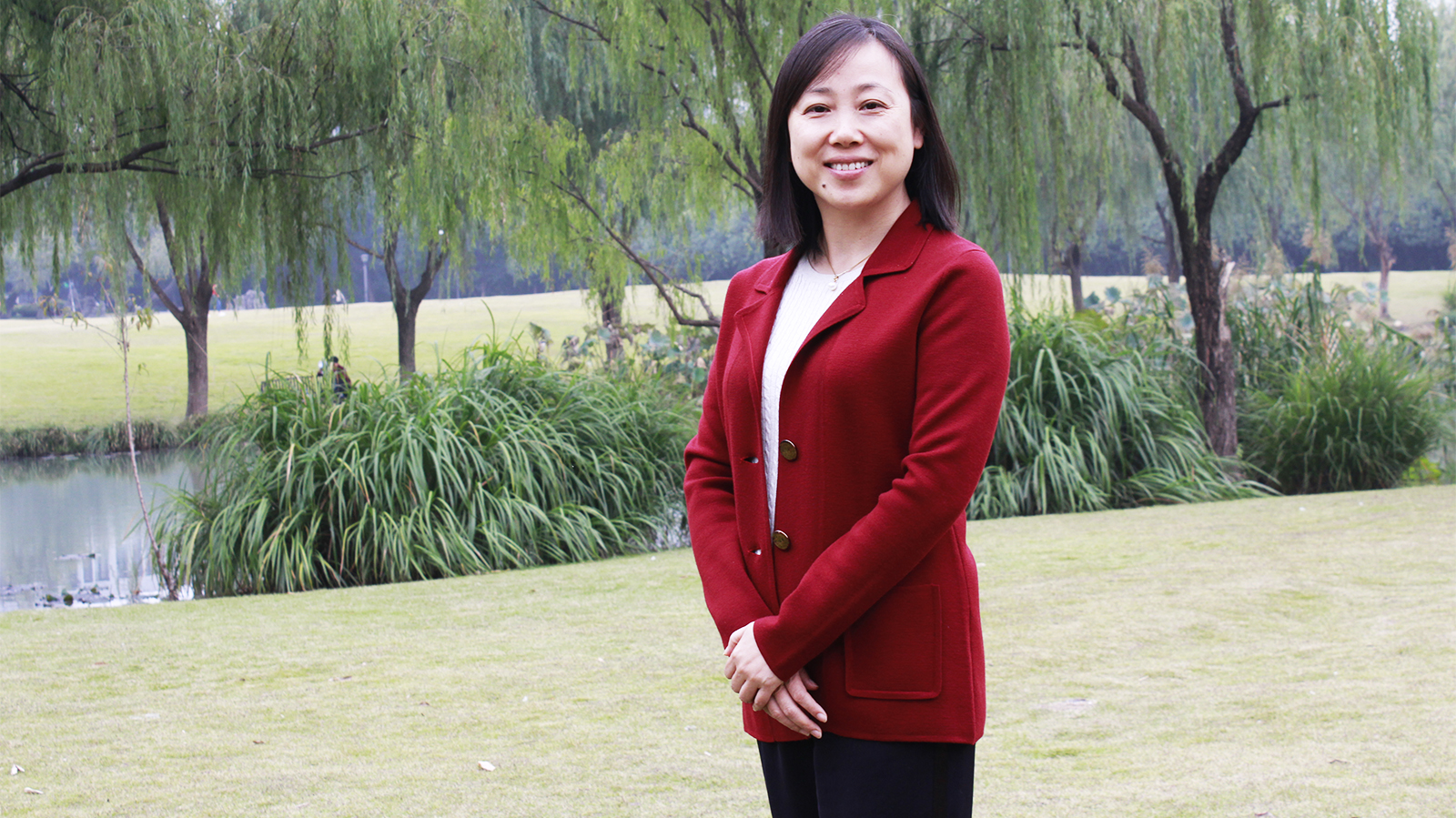
ZJU’s International Outlook score doubled from 25 in 2018 to 52 in 2019. Strategy and execution are like the two wheels on a cart; you cannot have one without the other. How did they achieve this in just one year? Director of Office of Global Engagement, LI Min, let us in on the secrets of ZJU’s excellent execution.
ーHow did ZJU improve its score in such a short term?
THE’s International Outlook is composed of three simple metrics that require long-term focus: the proportion of international students, percentage of international staff, and the number of international research collaborations. These aspects can’t be improved overnight. It’s the outcome of the effort we undertook in the last few years. There are four aspects to ZJU’s internationalization strategy– (1) faculty hiring, (2) globalization of education programs, (3) incentive system for collaboration, and (4) outreach.
ーHow do you attract international faculties?
In the last few years, China has made great efforts to attract the best faculty and students from all over the globe. We work hard to recruit excellent researchers from across the world and provide a very competitive compensation package, accommodation, research environment, and grants. Our motto—”seeking truth and pursuing innovation”—attracts like-minded researchers. Additionally, the campus in Hangzhou is one of our biggest advantages; it’s a magnificent city with a mix of natural beauty and innovative vitality.

ーIncreasing the number of international students is the challenge for most Asian universities. Any tips?
Earlier, we only had international students who wanted to study the Chinese language and culture; students interested in other subject areas were not attracted to education programs taught only in Chinese. However, we’ve overcome this challenge by developing curriculums in English in broader disciplines, especially in science. International Campus is one of the most significant initiatives pushing this policy further.
ーHow can a university influence a researcher to participate in more international research collaboration and co-authorship?
We have partnered with around 200 universities and institutes outside China. Such partnerships increase not only the number of international students but also research collaborations. We incentivize our faculty members to carry out more research collaborations by providing seed funds. This comprehensive support system motivates researchers to be more open to collaboration. In recent years, the number of international co-publications and citations has grown rapidly, which must be impacting our International Outlook score.

ーNot all faculty members may be ready to teach in English. How do you deal with this issue?
Our HR office offers faculty development training programs, including something called the New Star Program which supports faculty members who would like to spend one or two years abroad to gain international experience. In the long run, the program benefits the university because those who return are connected to an international network and understand the advantages of carrying out international collaborations; this helps them collaborate more easily.
ーWhat’s the structure and role of the Office of Global Engagement?
Our office is mainly responsible for ZJU’s global strategy and its implementation. We work closely with relevant offices and colleges and schools to make action plans and execute them with the aim of international excellence. We have six divisions: General Management; Global Partnerships; International Mobility; Outbound Administration and Service; Hong Kong, Macao, and Taiwan Affairs; and Global Communications. Deputy directors are assigned to each division and they report to me. It’s a 20-member team that works together closely.

ーHow do you typically start a new project?
Often from scratch—conducting surveys, researching other universities’ best practices, and understanding our own university’s strengths and weaknesses. Our job is to think of how we can use our uniqueness to make ZJU globally stand out and attract potential partners, faculty members, and students. We keep revisiting the vision to ensure that our strategy is aligned with the overall goal of the university.
ーZJU is very active in international communication. What’s the thought behind the activities?
When we started, it was clear to us that English communication with a global audience is essential. A world-leading university has to be accessible to the outside world, but the previous information we provided was not customized for a global audience. Therefore, we critically evaluated the old English website and asked ourselves, “who is our target audience?” That’s how we started the journey of improving our global communication and established a new team of Global Communications two years ago. We started engaging on social media in other countries, and we also sent out an English newsletter to partner universities, alumni, previous visitors and others who are interested in ZJU, to keep them engaged and updated with our latest research, educational advancements, and campus news.

ーHow do you develop talent to execute internationalization?
You may be surprised, but none of my team members were experts in journalism or media communication. Unlike private companies, universities are new to branding and promotion; we are all learning together. What are the best practices we should learn from other universities? What are our strengths and weaknesses? Where do we stand? We began by asking these core questions and then gradually formed our communication strategy. Nevertheless, we are continually learning.
ーWhat is “internationalization” for you?
If you ask anyone in academia, they will tell you internationalization is essential. We have to think deeper about why it’s needed. I would say internationalization is an approach, not an end goal. It is a practical approach to improve the quality of education and research by traversing linguistic and cultural boundaries and opening up the campus to global talent. Our journey has only just begun.

