Column: A quick guide to the F1000Research– University of Tsukuba partnership
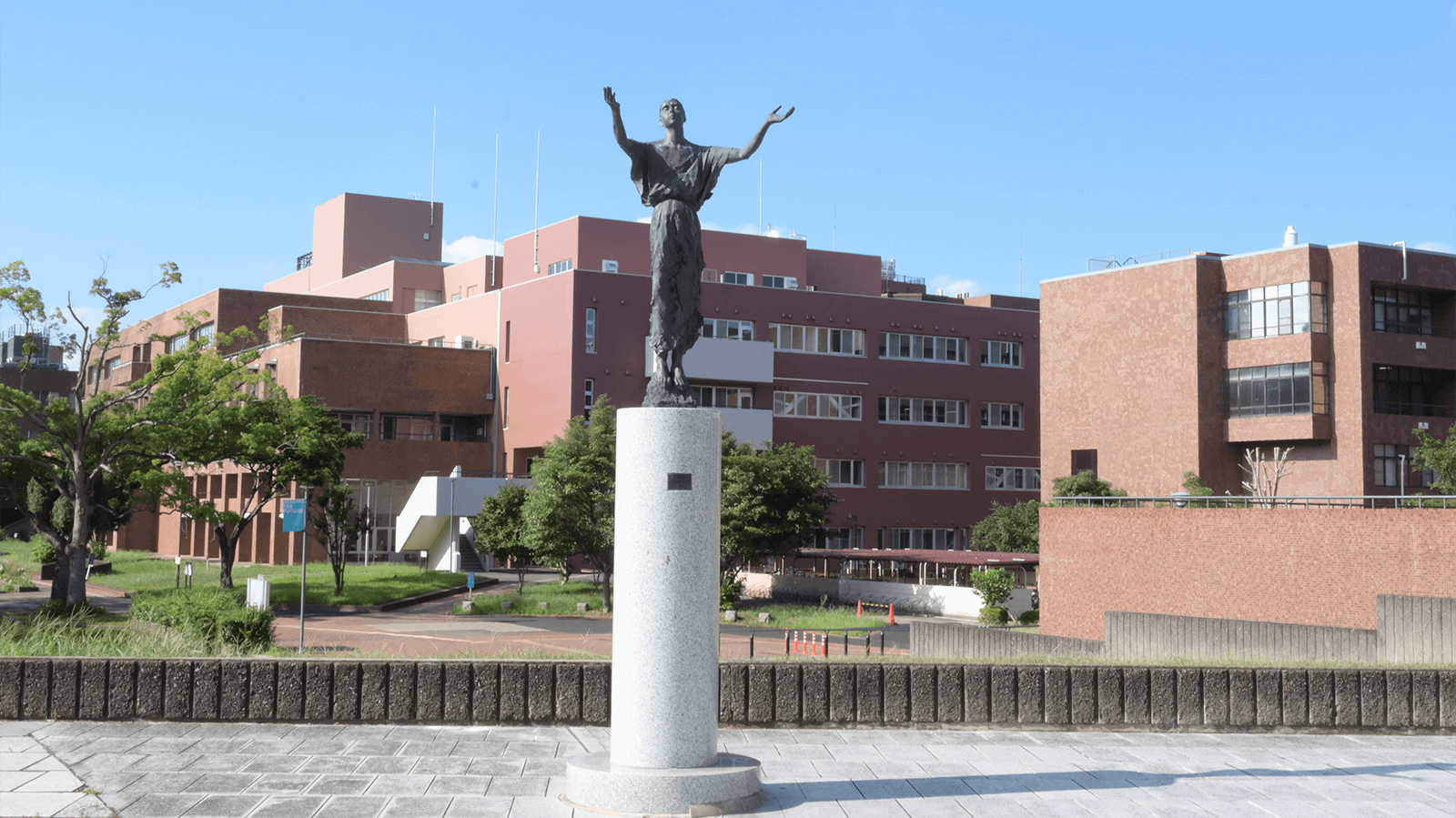
In May 2020, Japan’s University of Tsukuba announced that it had entered into a partnership with F1000Research, the open access publishing platform, to develop the first open research publishing gateway that will allow researchers to publish in English or Japanese.
F1000Research offers rapid publication and transparent peer review through an online gateway and editorial guidance on making all source data openly available. Through its innovative open access model, it aims to give authors the power to decide where and how their research is made available.
Under this partnership, authors affiliated with the University of Tsukuba will be able to publish any research or data openly. Humanities and social science researchers, in particular, have reason to cheer, as the platform will allow researchers to choose whether they wish to publish in English or in Japanese.
This initiative is the latest step taken as part of the global open access movement. With milestones like the Budapest Open Access Initiative in 2002, the Bethesda Statement on Open Access Publishing in 2003, and the Berlin Declaration on Open Access to Knowledge in the Sciences and Humanities in 2003 and more recent initiatives like Plan S and Projekt DEAL, it is clear there’s a strong backing for the open access movement.
The partnership, which gives everyone access to all output at no charge, could not have been more timely. With the COVID-19 pandemic imposing a financial burden on almost every industry, steps aimed at pulling down paywalls and giving people access to information are welcome. Besides, by making data openly available, the open access model, and F1000Research in particular, aim to facilitate collaborative research, the need of the hour.
The partnership between F1000Research and the University of Tsukuba, one of Japan’s premier institutions of higher learning, is being seen as Japan’s earnest attempt towards open access, an area that, according to industry experts, it has shown no leadership in so far.
A less talked about but important advantage of this partnership is the flexibility it will offer researchers in selecting the language of the output. While English is considered the universal language of science, it poses an obstacle to researchers not well versed with the language. The F1000 Research platform removes this limitation by allowing researchers to publish in an international journal in Japanese. This move is being welcomed by researchers who feel subjects like Japanese philosophy, history, and literature can only be fully discussed in Japanese.
Moreover, under this model, papers in Japanese will be indexed in databases such as Scopus and Web of Science, thus ensuring more visibility for high-level research results in Japanese.
The partnership is being considered an important move for both F1000Research and University of Tsukuba. By partnering with the one of Japan’s top research universities, F1000Research aims to make great strides in the open access movement in Japan and change the way research is disseminated. For the University of Tsukuba, the platform, by allowing faster publication in two languages, will give impetus to its outreach activities and reputation.
Breaking the barriers of modern academic publishing: A movement started by humanities and social sciences researchers
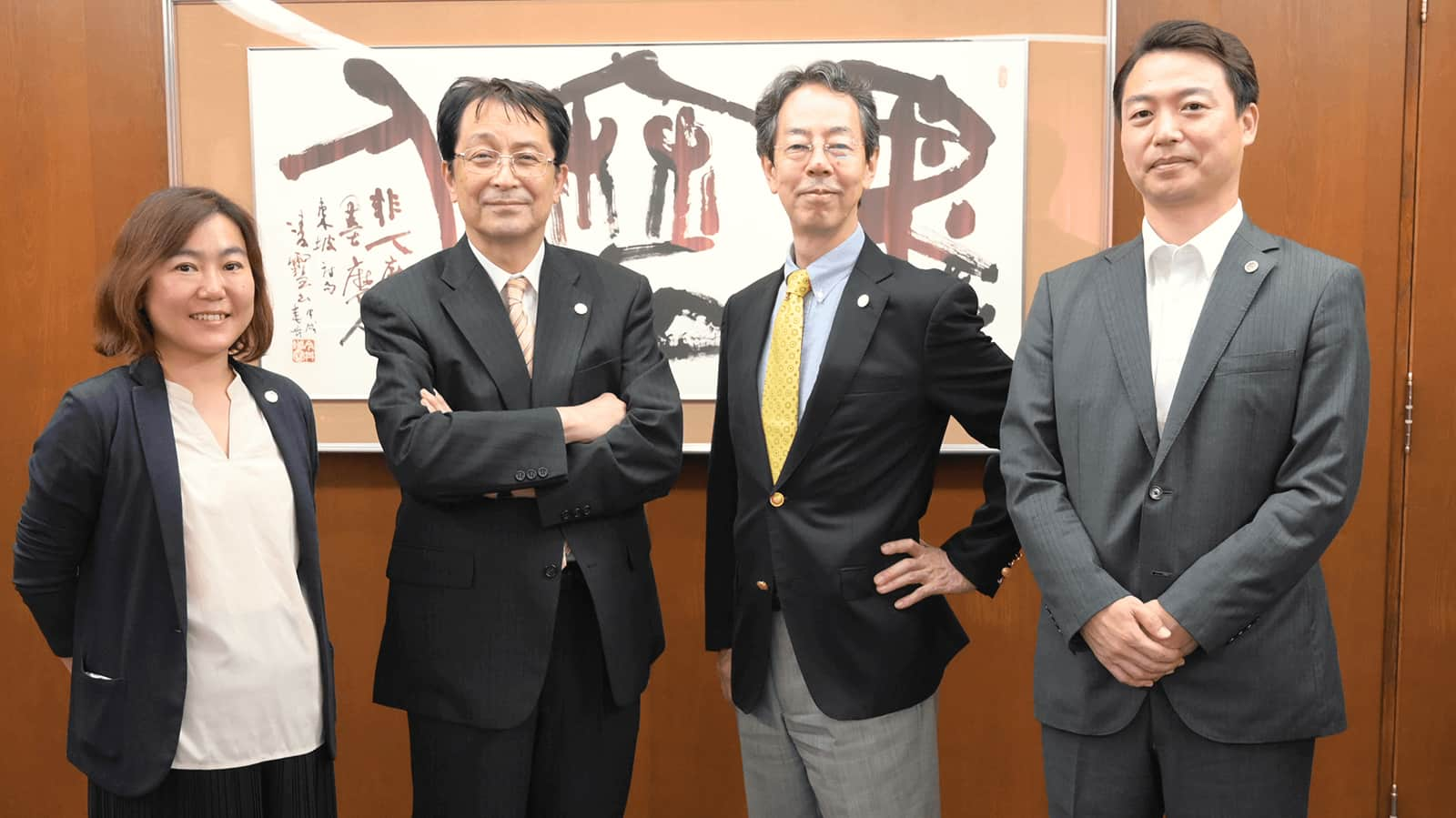
“Was the implementation of the F1000Research platform meant to highlight an issue relevant to the modern academic publishing system?” This was the first question we posed when we wrote to the University of Tsukuba for an interview. The answer was a resounding “Yes!” We tried to determine what it meant for a university to have its own academic publishing gateway, but we realized that this was a movement started by the humanities and social sciences’ researchers to bring changes in the publishing industry.
Challenging the English-oriented, impact factor-centric publishing industry
It all began with a new academic journal evaluation index called iMD (index for Measuring Diversity), originally developed in 2017 by the advisor to the university’s president, Professor Jun Ikeda, and Research Administrator at the university, Yukihito Morimoto. Prof. Ikeda—whose work also spans Library and Information Science, in addition to Humanities and Socio-information Science—questioned the fact that the typical citation-based journal evaluation models, such as the Journal Impact Factor, cannot fairly evaluate research in the humanities and social sciences. In response, he developed iMD, which evaluates all academic journals regardless of its country of origin, language, or field from a completely different perspective: diversity.
The iMD approach is very simple: journals are scored based on the number of institutions and countries represented by the authors of the papers published in the journal each year. Prof. Ikeda states, “The more papers are published by researchers from more countries and research institutions, the higher is the author diversity of the journal.” There are various problems with the impact factor, such as its inability to capture changes in short-term trends and a lack of transparency of the citation count data that form the basis for calculating the score. Researchers wanted to address the skewed situation that it was overwhelmingly advantageous to publish in journals distributed in English, in the fields of natural science, and from a Western institution or organization.
Prof. Ikeda says, “I do not deny the importance of English in academic communication. However, it is extremely important to publish in languages other than English for the humanities and social sciences. For example, papers on Japanese literature and research dealing with Japan’s Constitution, which are published in Japanese, should be considered the best in the world, shouldn’t they? It is wrong for these papers to be considered subpar just because they cannot be evaluated on a universal level unless they were written in English; good research in any language deserves to be evaluated. However, nowadays, university rankings, national university evaluations, and on-campus research evaluations are based on overseas dissertation databases such as Scopus. Those databases and evaluation systems often do not index non-English publications in the field of the humanities and social sciences nor consider them as achievements. I thought that the current trend of giving preference to English publications in journal indexing was absolutely strange.”
Prof. Ikeda’s team organized an international symposium to announce the launch of iMD and collect views from international academic publishers. That was the first time they met Rebecca Lawrence, Managing Director at F1000Research, who was a speaker at the event.

Creating “a world without journals”
Originally, Prof. Ikeda and Morimoto were interested in the fact that the US-based Bill & Melinda Gates Foundation used the gateway of the F1000Research’s publishing platform (Gates Open Research) to publish its findings. At the end of her speech at the symposium, Lawrence appealed to the audience, “Let’s create a world without journals!” This kickstarted a conversation that eventually led to a collaboration between F1000Research and the University of Tsukuba.
F1000Research is a cross-disciplinary open research platform with many gateways linked to it. A gateway is a personalized portal for an institution or organization, with links to featured content and other resources. If a paper meets F1000Research’s guidelines in terms of content, quality, tone, and format and is published on the platform, anyone can access the findings, instantly and for free, without being bound by the journal publishing process or regulations. Further, papers published in F1000Research are automatically indexed on databases like Scopus provided they undergo peer review after publication. As such, papers can be accessed from the database without relying on the evaluation of any published journal. Typically, the author of a paper does not have the right to reuse or redistribute it (as the publisher has the copyrights for published papers), but F1000Research allows authors to retain the copyright. In a sense, this is a platform that acts as a counterculture to existing academic publishing systems.
“F1000Research is a one-of-a-kind model and is unlike preprints and open access journals. I wanted to do something completely new, rather than thinking about risks. I thought that the papers would be published on the platform, given the same important in databases, and evaluated,” says Prof. Ikeda.

The first step to overcoming the language barrier
F1000Research was initially unaware that publishing in Japanese was an essential requirement for this partnership. Even if humanities papers on F1000Research could be indexed in Scopus, it would not be possible to bridge the disparity between the natural sciences and the humanities/social sciences without being able to publish in Japanese. Prof. Ikeda and Morimoto were particularly concerned about publication in Japanese.
Prof. Ikeda recalls, “Our decision to partner with F1000Research hinged on its compatibility with Japanese. I strongly proposed that they develop a function that allowed researchers to publish in Japanese. Rebecca said, ‘Let’s do it!’, and I was very happy. They also agreed that there should not be any language barrier in research. I felt that they could be a reliable partner.”
There are various reasons for the language barrier, but the predominance of English in natural science research and Western publishers’ technological limitations are the main ones. Currently, Scopus indexes approximately 28,000 peer-reviewed journals around the world. Regardless of the country of publication, about 80% of the papers from these journals are in English. The reality is that the needs of the humanities and social sciences fields in Japan do not fit into the commercial framework of major publishers and do not have enough global support for publishers to invest in multilingual technology development.
Prof. Ikeda says, “Double-byte characters in Asian languages like Japanese, Chinese, and Korean have completely different character codes from single-byte characters in the English alphabet. This poses a huge technical barrier for publishers. Now that Unicode is very popular, it’s possible to achieve this. But because of a lack of technical expertise and motivation, this hasn’t been realized. Humanities and social science researchers have asked major academic publishers if they could index the literature published in Japanese, but a huge language barrier existed. Most of them said that they did not want to handle Japanese characters and wanted to work with single-byte characters in bibliographies for citation purposes. Some of them even suggested that we transliterate the Japanese bibliography into Roman characters.”
Any language barrier can be overcome if the barrier posed by Japanese can be overcome. Morimoto says this is just the beginning of the multilingual publishing movement. “By taking on the unprecedented task of disseminating research in languages other than English on this platform, we want to innovate in research dissemination and disseminate research in any language. I want a world where researchers can communicate in their local language, be it German, Russian, or Zulu. I hope what we do lays the foundation for future innovation.”

Ensuring the quality of papers in post-publication peer review
The most difficult thing to understand about the mechanism of F1000Research is the concept of post-publication peer review. In the existing academic publishing process, the editor checks the papers submitted to the journal. Several peer reviewers evaluate the papers, and those that meet the criteria are published. However, F1000Research “publishes” pre-peer-reviewed papers on the platform. It is often confused with “preprint,” which is a pre-published paper; however, papers on F1000Research are published and can be cited. After publication, peer reviewers are invited on the platform to carry out open peer review, and all revisions to the peer-reviewed paper are made public. It is a novel approach that ensures the transparency of academic verification by removing the hurdles for research publication, thereby increasing the speed of publication and making the entire process transparent.
But as a university, does it have concerns about publishing papers before it undergoes peer review? Prof. Ikeda answers, “It is necessary to ‘evaluate time’ to verify whether the research is correct. In the humanities and social sciences, some research is evaluated in units of 10 to 100 years, and some others are not evaluated at all. It’s the same in the natural sciences, and published papers are constantly being retracted. In other words, the findings of all papers are tentative hypotheses. A theory I believe to be correct now may be reversed in 20 years. I think that the current peer review system is the best we have at the moment, and we should value this system where the research is carefully evaluated by experts before publication. However, you cannot say, ‘This research is universally correct because it is published in Nature.’ In that case, it may be fairer to disclose everything, including the evaluation of peer review, the revision process, and comments. Wouldn’t it better to have more choices in the way we can publish?”

Let’s just do it! – The president approved immediately
For a national university, with many stakeholders and decision makers, agreeing on the direction to take and collaborating with a start-up like F1000Research must have been extremely difficult. Prof. Ikeda, Morimoto, and Masayo Shindo led the project on-site, and right from the beginning, all decisions were made together with Prof. Kikoshi, Vice President of Research, and Prof. Aoki, Director of Humanities and Social Studies.
A university-wide project cannot progress without considering the needs of researchers across disciplines. Vice President Kikoshi was responsible for collecting feedback from the researchers at the University of Tsukuba, conducting needs assessment surveys with the directors of all departments, and organizing inputs to help decide the way forward.
The president’s approval was the last step. Getting the president’s approval was unexpectedly smooth, says Prof. Ikeda. “We went to him with the intention of talking him into this idea. But turns out he is the easiest person to convince. He loves to try innovative things and encourages others to try new things. We took him through our approach and our interactions with all the directors on campus. ‘Okay, let’s just do it!’ he said immediately after listening to us. The University of Tsukuba is said to be a new concept university and follows the philosophy of trying out new things. President Nagata embodies this philosophy.”
It helped that the president had long been aware of the problem: that the current academic information distribution is over-commercialized. “A paper is public property created by investing money, including public funds. Despite being public property, research papers have been over-commercialized in modern systems. The publisher holds the copyright to the content, and researchers have ‘outsourced’ too many aspects of publication. Researchers should be committed to the distribution of information about their research. The president has always said that this situation must change.”

“When you do something new, do not rush.”
Not all researchers on campus understand this new publishing model. The academic publishing culture and opinions vary across disciplines.
Shindo, who has a background in the life sciences, says, “The reality is that it will take some time for researchers in the natural sciences—who mainly write papers in English—to enjoy the benefits of gateways like F1000Research, and those who are interested will still want to wait and watch. The challenge for the university lies in dealing with the reality that the culture of journals in each discipline is solidified.”
Throughout academic publishing’s long history since the sixteenth century, publishers have taken charge of distribution. Experts in each field conduct peer review to ensure the academic quality of the paper. This approach has not changed much—not even in light of recent disruption in the distribution model. The emergence of e-journals and open access following the spread of the Internet has influenced the publishing business model. But universities have somehow remained out of the loop of this ecosystem for a long time. Nevertheless, soaring subscription and publishing costs, and the system of research evaluation centered on Europe and the United States, have gradually put pressure on university finances and its diversity in research, even as international research competition gradually intensifies every year.
This initiative by the University of Tsukuba may seem like a small drop in the ocean, but will this drop eventually lead to a ripple that will return power into the hands of researchers? And how much do individual researchers want from this move?
Prof. Ikeda says, “The most important thing I learned is that you should not rush when you attempt something new. It is difficult for many people to understand the vision, aim, and its implications at once. Therefore, I think it is important to gradually improve understanding. I never expected to have hundreds of papers to be published on our gateway as soon as the platform was launched. Start with 10 or 20 papers and gradually scale up. Since it’s a new initiative, I want to discuss the pros and cons carefully with the researchers in the field, and make changes gradually.”

Profiles
JUN IKEDA
Professor of Humanities and Social Sciences, Advisor to the President, University of Tsukuba.
After graduating from the University of Tsukuba, School of Humanities, Ikeda completed his master’s degree at the Graduate School of Arts and Languages. He obtained a Ph.D. from the Graduate School of Arts and Sciences, Tel Aviv University, in 1995. After working as an Associate Professor in the Faculty of Foreign Studies, Kansai Gaidai University, he joined the University of Tsukuba in 2000. He specializes in Semitic studies centered on Hebrew and Akkadian as well as in Library and Information Science/Humanistic Social Informatics.
YUKIHITO MORIMOTO
Research Administrator, URA Research Strategy Promotion Office, University of Tsukuba.
Morimoto obtained his doctorate in economics from the Graduate School of Economics, Kansai University. After working at Kansai University URA, he joined the University of Tsukuba Headquarters URA in 2013. He developed iMD in collaboration with Professor Jun Ikeda. In 2018, he won the Grant-in-Aid for Scientific Research as part of the URA’s work.
MASAYO SHINDO
Research Administrator, URA Research Strategy Promotion Office, University of Tsukuba. After graduating from the Faculty of Natural Sciences, University of Tsukuba, she obtained her master’s degree from the Graduate School of Agriculture and Life Sciences, University of Tokyo, and a doctorate in science from the Department of Genetics, Graduate University for Advanced Studies (SOKENDAI) in Kanagawa. She specializes in developmental biology. Following her postdoctoral studies, Shindo is currently providing a wide range of research support by using her experience in branding, marketing, and technology/intellectual property transfer support from a private company.
Putting control back into the hands of researchers―The future of academic publishing and university rankings is being challenged by the reform mindset of the University of Tsukuba
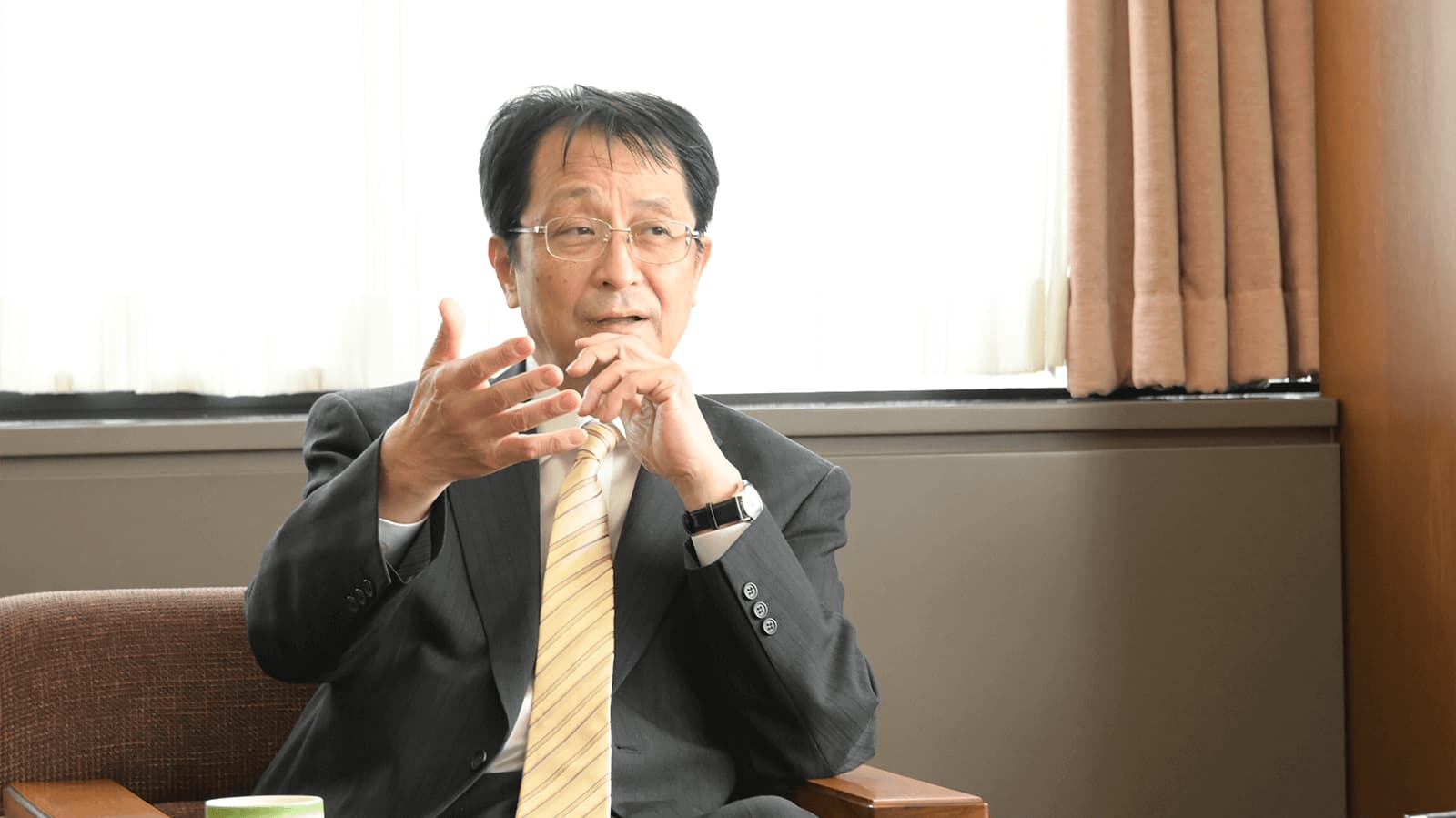
Kyosuke Nagata is a passionate reformer who came to the university to promote change. The University of Tsukuba’s speedy implementation of its own open research publishing gateway (something that was not considered possible at a national university) was strongly supported by the president. Why was the University of Tsukuba the first Japanese university to stake a step against the recent, and growing, academic publishing issue? President Kyosuke Nagata explains.
—Your university’s bold decision to develop a proprietary open research publication gateway seems to be a strong message to major commercial publishers.
Scientists and scholars must take charge of the core of research—this is the most important message we want to convey. Researchers are responsible for conducting research and publishing, and research initiatives should stay with researchers. However, academic publishing is dominated by publishers who act like real estate agents and “mediators” of publishing. This is not how it should be.
Researchers are the “producers” of research, and their findings should be widely consumed as public property around the world. However, in the current system perpetuated by major commercial publishers, publishers, not the researchers, have control and own the copyright to the publication. This is the fundamental issue with modern academic publishing.
Second, major publishers charge researchers twice: when manuscripts are accepted for publication, they pay a high publication fee to the journal, something to the tune of $4,000 or $5,000 for one manuscript. In my specialized field of life science, I may write ten papers a year. This brings the publishing fee to $40,000–50,000. Researchers are then charged a journal subscription fee to read their own work. In some cases, researchers may end up paying the publisher more than what they spend on research.
Researchers have no control over the publication of their research. They don’t own the copyright to their work, but they are expected to shell out a large sum for magazine subscriptions. The university and the research community want to put an end to this. We wanted to cast a spotlight on this problem through our unique way by developing our own open research publishing gateway (with F1000Research).

—While there has been a widespread boycott of academic publishers at universities abroad, particularly in the US and Europe, very few Japanese universities have taken any concrete action in this direction.
People in Japanese universities share this concern. You might say that we should take a stronger stand like in the West, like boycotting the magazine subscription of a specific publisher or declaring noncooperation with the peer review process, as seen in Germany. But I wonder if this is the correct course of action.
Doesn’t it seem contradictory and strange that, on the one hand, we are seeking to wrest control of research from commercial publishers and give it back to researchers and, on the other hand, governments and universities are taking literature away from researchers and forcing them to not participate in the peer review process that forms the basis of research development?
Some circumstances in the university system and culture are peculiar to Japan. Unlike countries with strong private universities, such as a number of European nations and the United States, science research conducted in Japan is concentrated among national universities. National universities have a responsibility of protecting research quality in Japan. Thus, we need to ask whether it is correct to prioritize university policies and restrict access to research information, which is the lifeline of the faculty and students. Even if you want to challenge a major publisher, the underlying culture of national universities does not allow it. It would result in doing things in the wrong order and hinder the work of scholars rather than helping them get scholarships.

—Another important point is that the gateway developed in collaboration with F1000Research is the first in the world to enable publication in Japanese.
We cannot ignore the fact that the humanities and social sciences have been at a disadvantage in Japan. Consider a scenario where one writes a dissertation on English literature in English, on German studies in German, and on Japanese studies in Japanese. We cannot ignore problems facing the universities in Japan, such as the one with academic publishing. Irrespective of the language, I think that the basic academic information should be shared on an international platform so that it can be accessed by anyone in the world. Those who find value in such information will delve deeper even if the text is in a foreign language. However, at present, even primary information about the existence of a paper is not shared in international databases. This is a huge problem.
Contemporary research is progressing globally and across disciplines, and the humanities and social sciences are no exception. Just look at the research on the novel coronavirus. We live in a time where research transcends geographical borders and disciplines. Creating a publishing platform that transcends the language barrier is of great significance. As a university that caters to all disciplines, we at the University of Tsukuba felt that we must do something to make the world more aware of the value of humanities and social sciences research. The F1000Research gateway allows researchers to submit papers in Japanese, and if certain criteria are met, these papers will be indexed in international databases. Of course, this is just one step, and publishing and research evaluation in the humanities and social sciences fields need further reforms.

—This move—of proposing a publishing model that does not rely on publishers—by the University of Tsukuba seems to be a new way of indirectly questioning the challenges of modern academic publishing.
“Why the University of Tsukuba?” some ask. “Continuous reform of the system” is a mission that our university has been carrying out since its foundation. The history of the modern national universities began when the old Japanese universities underwent systemic reforms in 1947. The University of Tsukuba was established in 1973, 26 years after these reforms. Our university is committed to reforming the old system and challenging and improving the prevailing rigid structure. The university believes that one must have a reform mindset before asking whether or not one will succeed. If that is the University of Tsukuba’s role, we cannot ignore problems facing the universities in Japan, such as the one with academic publishing. One has to do what one needs to do even if risks need to be taken. This is what I truly believe in.

—If open publication advances, will there be a change in the way universities are evaluated, like in the current process where universities that publish in English and have the highest number of papers in the most influential journals are ranked high? What are your views on university rankings?
The president of Oxford University was very clear about his stand on university rankings: “University rankings are useless, but I am happy to be number one.” Most universities admit that rankings have a bearing on the university internally and externally, but I do not think that that it is enough to change the education and research system of the university. It is meaningless if the focus is on improving the rank. Rankings may not be that important, but they still are a big deal. People, irrespective of where they come from, want to be ranked higher. I am no different.
The significance of the current university rankings will eventually be lost. Universities have seen their rankings fluctuate with ranking authorities changing databases and methodologies every year. The limitations of the ranking system are evident, and the credibility of the results is already diminishing. Eventually, I believe AI will make such rankings irrelevant by uncovering the unique proposition and value offered by each university, and students will be able to use an app to select a university based on their needs. The current ranking is based on a biased index decided by someone, such as a reputation survey or by citation. However, an AI-based indicator will be more objective and can be customized as per students’ interests. If university information is made more easily accessible as described, the ranking conducted by organizations like Times Higher Education (THE) and Quacquarelli Symonds (QS) will cease to be relevant. Each university will also be able to promote institutional research, analyze its strengths and weaknesses, and step on the international stage.
—The University of Tsukuba staff said that one of the most important factors in their decision to introduce F1000Research was the President’s encouragement. What is your management policy as Rector?
I am not a “well-mannered” president (laughs). I do not follow the old system. There are many things that everyone cannot do even if they want to do it or change things. Bringing about changes in the university is difficult for me. However, someone has to change the foundation of a rigid society. I think that my views are aligned with the University of Tsukuba’s reform philosophy. For the entire university organization to change, there must be a system to support and back those who want to change—even if you do not get full approval from the faculty and staff. The University of Tsukuba is such a university, where a few supporters can help and change the organization by taking small and steady steps.

KYOSUKE NAGATA
Kyosuke Nagata, President, University of Tsukuba Prof. Nagata obtained a doctorate in Pharmacy from the Graduate School of Pharmaceutical Sciences at the University of Tokyo in 1981. He has been a Professor of Basic Medicine at the University of Tsukuba since 2001. In 2009, he elucidated the structure of RNA polymerase in collaboration with Yokohama City University. In 2013, he became the President of the university. He specializes in molecular biology and viral science.
Eliminating the language barrier in research―How the University of Tsukuba is changing the way we share groundbreaking knowledge
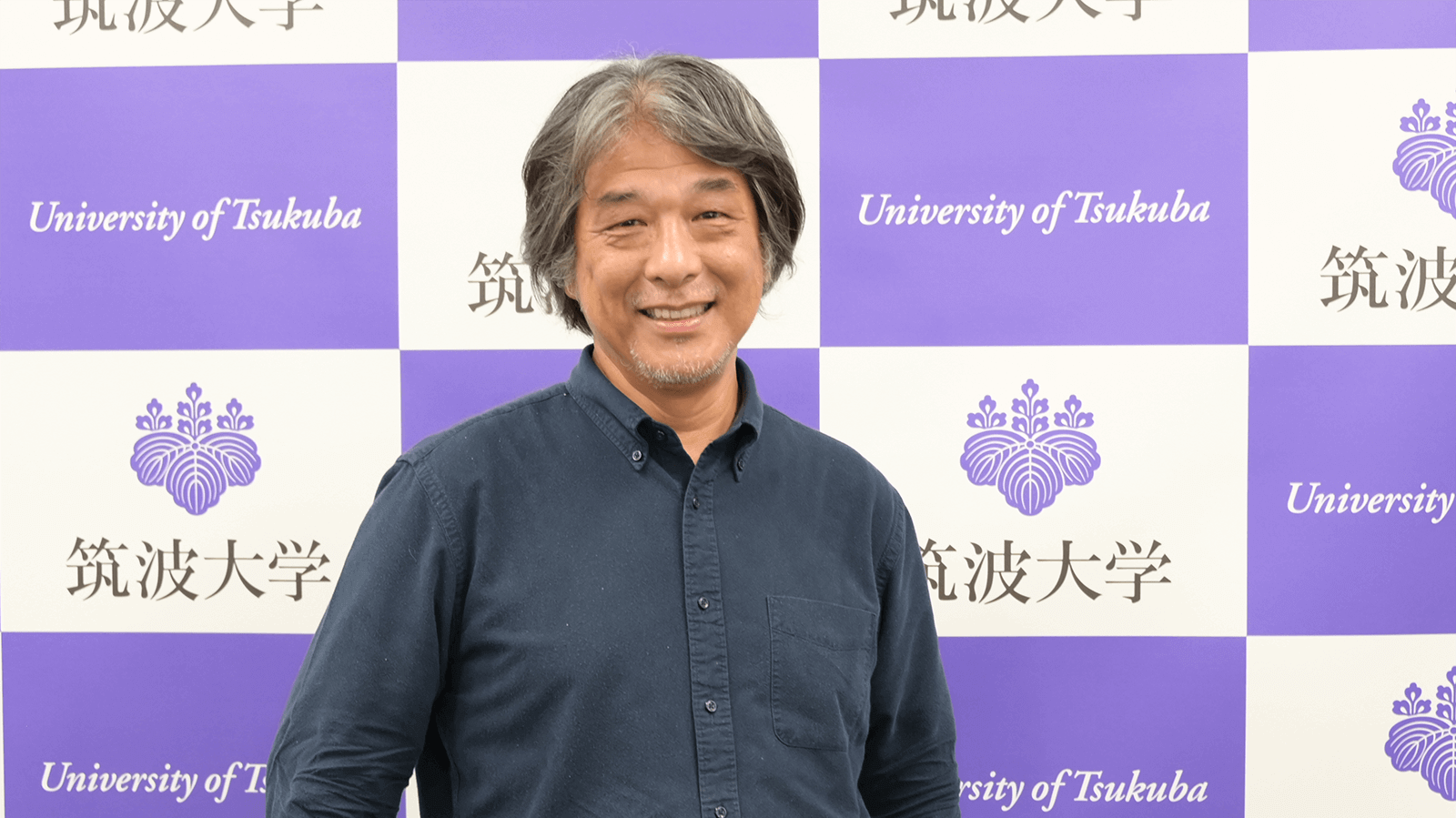
To what extent can the Open Research Publishing Gateway—which allows publication in Japanese and English—address gaps in research evaluation in the field of humanities and social sciences? Subaro Aoki, a linguist and Director of Humanities and Social Sciences at the University of Tsukuba, states that this publishing model does not address just one problem. He feels that this model could change the way knowledge is shared. Can we expect a future where the prevailing English-oriented culture does not exist and the language barrier is eliminated?
When humanities and social sciences are not considered essential—How can we solve the problems of funding and evaluation in basic research?
Popular opinion right now is that the humanities and social sciences studies are inessential disciplines. However, it’s not just these fields; even the natural and physical sciences are facing difficulties. In a nutshell, short-term, non-profitable research is facing a challenge.
The humanities and social sciences are similar to the natural sciences in that both seek to use long-term research to address fundamental questions, one dealing with human beings and society and the other with nature. Some applied research can secure a large budget, but much of basic research does not make money. Nowadays, research that is not commercially viable or which does not benefit society tangibly is not accepted.
Moreover, performance in the humanities and social sciences cannot be evaluated using the same yardstick as the natural sciences. While natural sciences can be evaluated using a research index (to some extent), the humanities and social sciences cannot. The latter will be found to be lacking and deemed irrelevant if measured using the same metrics. Research should be evaluated on the basis of its merits, not on its commercial viability. However, as with the university rankings, the current methods of researcher and university evaluation focus on the natural sciences and technology, and the humanities and social sciences are pushed to the fringes.
Humanities and social sciences researchers need to acknowledge this reality and change the way they present research. In this context, I think F1000Research is revolutionary because it provides a level playing field.
It’s time to innovate—F1000Research can become a new knowledge dissemination platform
The most interesting thing about F1000Research is that it is not a journal. It is a knowledge dissemination platform in a broad sense. Its model for knowledge dissemination differs from the conventional publishing approach and is the opposite of the traditional method seen in the humanities and social sciences.
Humanities and social sciences research is typically published as books, and merit is given to the number of book publications. There aren’t many humanities and social sciences jounals of the caliber of Nature and Science. Most journals are produced on a small scale and have small readerships. Scientific findings are announced promptly and shared with a wide audience. Fellow researchers contribute to the body of research with follow-up studies, which lead to new technologies. This is the scale at which science research works. In the humanities and social sciences, however, researchers’ contributions are largely theoretical.
F1000Research, in contrast to the humanities and social sciences research model, does not aim to disseminate information in the short term. However, it does support the notion that anyone with an idea holds power. If you have that one groundbreaking idea, F1000Research allows you to disseminate it immediately by circumventing editorial and peer review. It is also indexed in the research database.
In the traditional model, readers subscribe to papers from a trusted journal and authors submit to journals that meet their requirements. Each journal has its own rules, conventions, and brand value. Papers “that suit their brand” are accepted while those that don’t are rejected at the screening stage.
F1000Research, however, encourages all types of submissions and screening is eliminated. It aims to share knowledge that traverses the boundaries of geography, language, and disciplines. Researchers have no choice but to compete in the quality of their work. Here, a paper is not considered important because it is selected by an entity but because it is evaluated positively. It is the reader who evaluates it, not the journal, and because it is open access, the reader can be anyone, not necessarily a researcher.

Make the English-first principle a relic of the past; auto-translation can eliminate the language barrier
Natural sciences researchers tend to publish their findings in English. The value of any research is determined by its publication in an international journal. This standard is being applied across disciplines, putting humanities researchers at a major disadvantage. Most humanities papers from Japanese researchers are written in Japanese.
Researchers of Japanese history, culture, and classics write papers in Japanese and even teach international students to write in Japanese. Some researchers of Japanese culture now believe that research on this subject must be written in English in order to make it accessible to the world.
F1000Research is offering an alternative by allowing them to publish in Japanese. They aim to deliver high-quality content, regardless of language.
Auto-translation has made significant progress in recent years; papers can be translated instantly and with considerable accuracy. Since I specialize in French linguistics, I write in French— but my research lab has students from various countries such as Nepal, Vietnam, China, and the United States, who write reports in their native language. For example, I let Vietnamese students write in Vietnamese so that they can convey ideas as clearly as possible, as opposed to writing in English, which they may be unfamiliar with. I use software to translate the content to Japanese, verifying with them if I understood the intended meaning, and give suggestions in English.
The language barrier will eventually be eliminated. Authors will be able to write in the language they are comfortable with. F1000Research will allow papers in Japanese to catch the attention of people who cannot read Japanese (provided the abstracts and keywords are published in English), and people will be able to understand the research using auto-translation.
The idea, not the language it is conveyed in, is important. I do not know if F1000Research shares this vision, but having an auto-translation mechanism that allows authors to submit papers in any language and readers to read in the language of their choice is a game-changer.

The platform is just a receptacle; it is the researcher’s responsibility to ensure the quality of content and create value
Only time will tell if the concept of F1000Research really works. The quality of submitted papers will determine how successful
the platform is. If people use F1000Research to publish the kind of papers they would have submitted to a university bulletin, we can’t deem it a success. Persuading researchers to buy into our vision and change their behavior is a formidable challenge. Therefore, the success of this platform depends on the researchers who use it.
The platform is just a receptacle. The researchers and their research is what brings value to the platform. F1000Research offers a high degree of flexibility, which could determine the scale of success the platform meets. As a university, we should first gradually increase the number of users and make sure they experience the advantages offered by the platform. Those using this platform will eventually become researchers teaching outside the university and help spread the word about the platform and we can share our results with other universities. I hope that eventually this will completely change the way we share knowledge.

Saburo Aoki
Director of Humanities and Social Science, University of Tsukuba
Aoki specialized in linguistics, French, and semantics. After graduating from the Department of Linguistics, Faculty of Literature, Besancon University, France, he obtained a doctorate in linguistics from Paris Diderot University in 1987. Currently, along with serving as Director of Humanities and Social Science, he heads the Bachelor’s Program in Global Issues at the University of Tsukuba.
Ask Rebecca: How F1000Research works
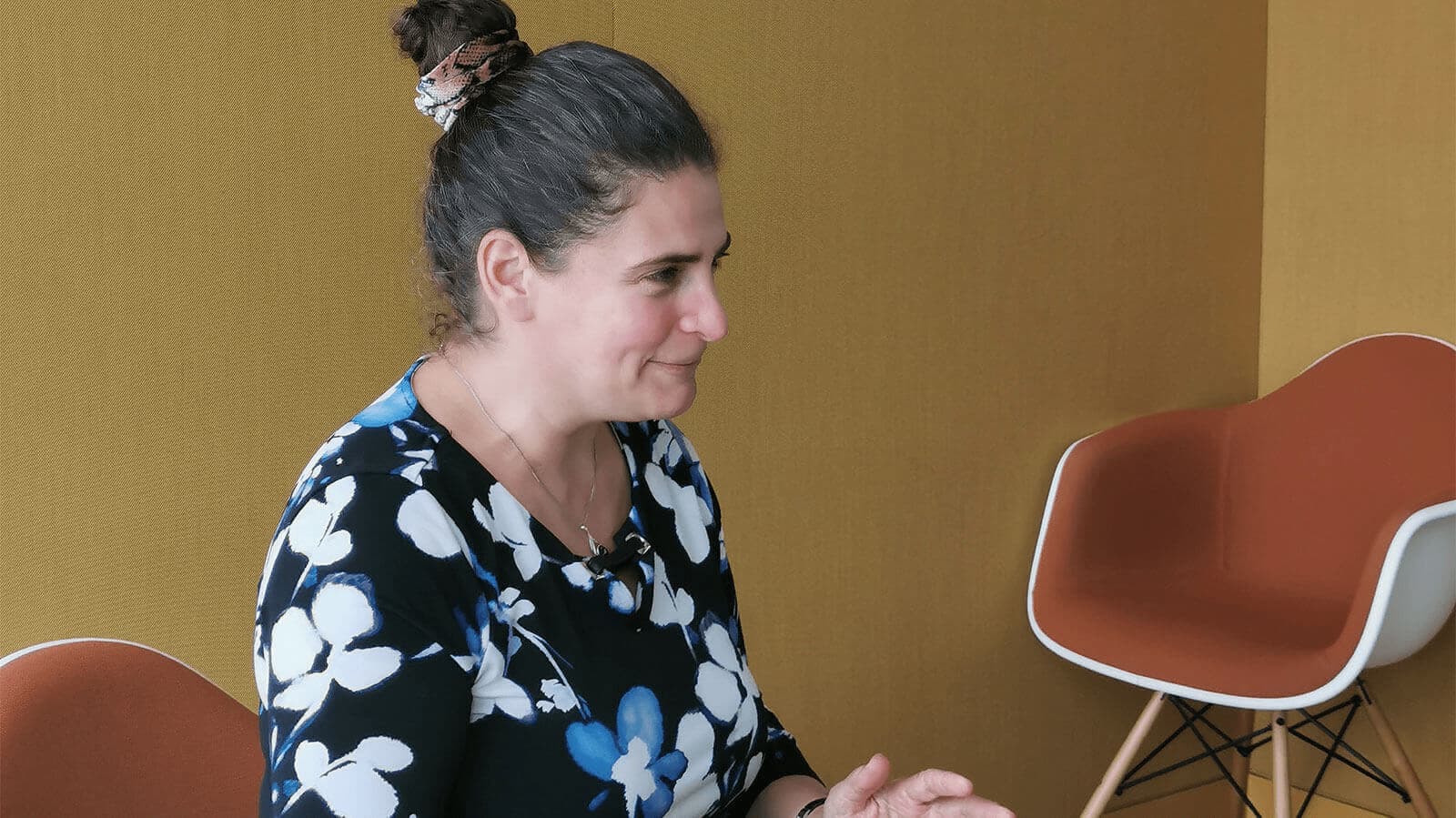
Q1. How quickly can one get published on F1000Research?
A1. You can see your article published in as few as 14 days. There’s no editorial selection or pre-publication peer review that will delay or stop publication. When you submit your article to us, we run some rigorous objective checks for plagiarism, ethical requirements, readability, affiliation, etc. We help authors with collating data and formatting. When everything is ready, we publish the article online and invite peer reviewers to conduct open peer-reviews on the platform.
Q2. How do you categorize F1000Research—a preprint or a journal?
A2. It is a lot like both, but also different. We call it an open research platform. The concept of preprint is to put your article on a server before you submit it to a journal. But once your article is published on F1000Research, it is considered an official publication. This means you cannot send it to another journal. On the other hand, unlike a journal, your publication on F1000Research triggers open invited peer review. Once your article is peer-reviewed, it is indexed in many bibliographic databases such as Scopus, PubMed, and MEDLINE.
Q3. Do you have editors who decide if a paper is accepted or rejected?
A3. We don’t have editors; it is completely author-driven. This is an important difference from traditional publication. All articles that pass the initial objective checks get published. After peer review, we don’t rely on one individual making a decision on behalf of the community on whether to publish an article or if it has “passed” peer review. Authors decide if, when, and how they want to respond to reviewers or if they want to reflect on the reviewers’ comments to publish an updated version at their own convenience.

Q4. How does open peer-review work?
A4. We invite peer reviewers after an article is published. We then publicly share peer-review reports on the platform and state if the article is “approved.” Unlike the traditional model, we make the peer-reviewers’ names and comments public, so their work is recognized and citable, and the process is transparent. Since the paper is already published, peer reviewers are not helping decide whether the paper should be accepted or rejected, but simply helping the authors improve the quality of the article. So, the peer-review comments tend to be much more constructive.

Q5. Can any organization create a space on F1000Research like the University of Tsukuba has?
A6. Yes. Any organization—universities and institutions, funders, learned societies and research communities—can create their own gateway on F1000Research. We provide a number of options where they can pull together their research outputs in one place and support their researchers to publish rapidly and openly. They can choose to either do this through a co-branded gateway with F1000Research or they can opt for their own white-label platform. An example of the latter is Wellcome Open Research, an open research platform where Wellcome-funded research is published.

Organizations can partner with F1000Research to create their own open research publication. They can opt for a co-branded gateway or a white-labelled version like Wellcome Open Research. Source: wellcomeopenresearch.org
Q6. What kind of output is published on F1000Research?
A6. F1000Research publishes research output in any format—traditional research articles, negative/null findings, method articles, software tools, data notes, and much more. We also support the publication of research outputs that don’t need peer review, such as whitepapers, technical reports, training materials, and posters. These materials are typically not published in traditional journals, and thus not citable. On F1000Research, all outputs receive unique identifiers, we track citations and other metrics, and encourage comments and discussion from the research community.
Breaking with tradition─How Elsevier evolved into a full-spectrum solutions platform for authors in the face of threat from open science

In the last decade, many leading academic publishers have reinvented themselves. In the ’90s, the emergent open science movement was, in some instances, perceived as a threat for academic publishers. But today, it is clear that publishers continue to play an important role in the research ecosystem, which has further evolved their role as well as their business opportunities.
We spoke to Laura Hassink, Senior Vice President of Publishing Transformation at Elsevier, to understand how the world’s biggest academic publisher is adapting to the changing landscape.
Becoming a full-spectrum solutions provider to authors
Academic publishers are often criticized for their commercialism in the context of open science. However, we can’t forget that publishers and academic communities have enjoyed an interdependent relationship since the nineteenth century. Today, around two million articles are published in 30,000 journals every year. Publishing such volumes of articles, and with the quality that is expected from research articles, would not have been feasible without the infrastructure set up by large publishers over centuries. When discussing the history of science and technology, platform innovations cannot be left out. Such innovations today require heavy investment in the latest technology, and we benefit from the investment by commercial companies.
Elsevier, the world’s largest academic publisher, has evolved from “an academic publisher” to “a global information and analytics business.” While it attracts institutional managements and library with products like Scopus and SciVal, researchers continue to be a very important customer base and Elsevier is rapidly becoming a full-spectrum solutions provider for the researcher throughout their ecosystem.
Laura has seen positive interest from the recent partnership between F1000 Research and the University of Tsukuba and welcomed similar initiatives aimed at improving the researcher ecosystem. “We look forward to hearing about their experience with this setup and what the scientific community and publishers like us can learn from it. What matters the most is the quality of research outcomes and advancing health and science, and the model that drives that should be open for experimentation and change,” she says.
She adds, “We are committed to continuously improve the publication model, processes, and practices. We want to take into account the changing customer needs. In the research ecosystem today, the role of funders, universities, and the government is evolving and publishers like us need to adapt and provide a better platform to continue providing support to the diverse stakeholders in science. Our goal is to provide better and more options to tackle long-standing issues by making use of modern technology.”
Addressing long-standing challenges
Transparency in journal processes, speed of publication, and cost of subscription have long been contentious issues. While the academic community may have not taken notice, publishers have been making concerted efforts to find suitable solutions. It may seem that by addressing these issues, commercial publishers are going against their self-interest (for example, by making articles available on open access, publishers are letting go of their golden egg, i.e., paid access to content). However, by tackling these issues, they are reconnecting with authors.
Here are some recent initiatives taken by Elsevier to tackle long-standing publication issues.
|
Issues |
Initiatives by Elsevier |
|
Transparency in peer review |
|
|
Speed of publication |
|
|
Cost of subscription |
|
“Elsevier journals are constantly trying to make the peer review processes more transparent,” Laura says. “Since 2013, Elsevier has made the editorial times and acceptance rates of our journals openly available and is constantly expanding its guidance and investing in tools to improve the process using the latest technology. The transparency of authorship is as important as that of peer review; we recently rolled out CRediT (Contributor Roles Taxonomy) to most of our journals, which offers authors the opportunity to include an accurate and detailed description of their diverse contribution to the published work.”
Elsevier has been tackling the issue of publication speed with investments in both technology and resources. “Our in-house publishers work with the editors of each journal to optimize the publication process. In most cases, we can publish the first version of the accepted paper online a few days after acceptance,” Laura adds. “We also invest heavily in tools to make it easier for editors and reviewers to do their work. Both editors and reviewers get access to ScienceDirect and Scopus to help them do their work by easily being able to look up co-authors, related manuscripts, citations, etc.”
The phenomenon of subscription cost increase—called “serials crisis”—and open access movements such as BOAI and Plan S required Elsevier to adapt to the changing landscape.
Laura explains, “Elsevier supports both subscription and open access, and we work with all our institutional and individual customers to find access models that suit their needs while optimizing access. As an example, in early 2020, we formed a novel partnership with Dutch research institutions that includes publishing and reading services as well as the joint development of new open science services for disseminating and evaluating knowledge. Over 90% of the journals allow open access publication and make an article permanently available. All journals offer a free, green open access option. Every year, over 45,000 subscription articles are made available under green open access—more than any other publisher.”
She adds, “We find it important that we provide transparent information to the author throughout their journey about their publishing options and the costs associated with that, for example, whether we have an agreement with their institution which enables them to publish open access with the costs covered centrally by the institution. We significantly invest in improving the author experience during the submission process.”
Regarding the need for local language publication in the humanities and its indexing and assessment, Laura says, “Elsevier has a very limited number of journals in the humanities and the areas where we do, journal titles are more allied to Social Sciences or could even be classified as either. On the whole, we have not seen a renewed push for local language publishing. It was something we received some requests for a few years back, especially in Spanish, but not recently. As a result, other investments took priority.”
A one-stop shop for the research ecosystem
F1000Research joined the Taylor & Francis Group this year, which gave authors publishing in Taylor & Francis journals another option of publication. In 2016, Elsevier acquired SSRN, an open-access online preprint community for research institutions and governments, and in 2018, Aries Systems, a workflow infrastructure solution for rapid publishing. SSRN provides a branded “journal-like” abstract page to aggregate preprint publications for institutions similar to F1000Research.
To support the diverse publication styles available today and stay relevant in this digital transformation, leading publishers and new platform ventures need to find ways to work together.
Laura believes there is a strong need in the scientific community to share research results early on, a need that has become very clear in the current COVID-19 pandemic, as researchers around the world are collaborating on vaccines and treatment. Preprint servers such as SSRN play an important role in this regard.
SSRN works closely with Aries Systems to accept submissions. Laura elaborates: “SSRN offers a platform where research can evolve over time by allowing revisions to papers and aggregating different versions (conference proceedings, working papers, book chapters, etc.) into a version group that creates a broader perspective of the research being done. Research is hosted on SSRN at all stages from ideas to working papers to preprints to versions of record.” Laura believes that this provides enhanced sharing and connectivity among researchers.
SSRN also facilitates the cross-pollination of ideas. Content is curated by SSRN staff across the platform’s 50+ research networks by categorizing research into different disciplines so that the researchers in one subject area can view the research submitted to another subject area. SSRN provides thousands of online communities for sharing scholarly research.
It’s clear that Elsevier is trying to build an ecosystem that facilitates author–publisher collaboration. First Look, for example, is a partnership between SSRN and some of the world’s leading journals to provide rapid, early, and open access to research prior to publication. Authors can “opt-in” to First Look when they submit their paper to a journal. A preprint version of their paper is sent to SSRN and posted to a branded First Look page on SSRN. According to Laura, First Look papers benefit from the broad SSRN services supporting discoverability.
Elsevier today goes beyond publishing, a change made possible by the evolving needs of the stakeholders in the research ecosystem and resulting new trends like open access.
Vastly modernizing and improving the traditional system of academic publication was no easy task, and significant investments in technology, systems, and processes were needed to bring about this disruption. However, all players seem willing to facilitate the digital age, hoping to reap the benefits.
References
1. https://www.elsevier.com/connect/transparency-the-key-to-trust-in-peer-review
2. https://www.elsevier.com/connect/reviewers-update/peer-review-using-todays-technology
3. https://www.elsevier.com/connect/editors-update/editor-time-savers
LAURA HASSINK
Laura Hassink is Senior Vice President Publishing Transformation at Elsevier. She is responsible for the transformation of key aspects of the publishing process and organization by embedding data driven decision making and iterative product management principles. Laura leads a team of around 170 people in multiple locations in Europe, US, and Asia. Laura joined Elsevier in 1997 and held several (management) roles in publishing, strategy, and (online) product development prior to her current role.
As the coronavirus pandemic spurs preprint culture, the University of Tsukuba looks to the future

In mid-April 2020, as the COVID-19 pandemic began to rage around the world, numerous papers on the virus began to appear. Academic papers typically do not make it to the front page of the newspapers unless they announce a major discovery, but scientific articles about this new coronavirus, which had to be tackled as swiftly as possible, were being published every day. Many of the news reports were questionable, filled with vague phrases like “it is possible” and “might be effective,” and too quick to assert that “X is effective against the coronavirus.” Researchers were among the first to pick up on this, sounding alarm bells about these articles on social networking sites. What prompted this phenomenon?
Typically, the first step in the publishing cycle is for researchers to submit their findings to a journal. After being vetted and deemed fit by the journal, the research paper moves toward publication, a process that can, on average, take between a few weeks to over six months. Waiting more than six months for these discoveries to be known is not an option if you want to curb a pandemic. Everyone wants their research results to be published as soon as possible, but no matter how hard you try, getting published in under a week’s time is a tall order if you follow the typical submission process.
As a result, there was a rush among researchers to get their papers published on preprint servers as soon as they were ready, rather than submitting them to journals. Many papers on the coronavirus from all over the world were being published on preprint servers. However, as these papers had not been peer-reviewed, their scientific credibility was uncertain. These articles were picked up by non-scientific media, many of which published dubious claims. Researchers pointed out the dangers of featuring articles not yet subject to peer review.
Then, in May, there came news about the University of Tsukuba in Japan introducing F1000 Research, an open research publishing gateway. This platform adopts a post-publication peer-review system that has evolved from preprints. It ensures that papers are published immediately and allows all readers and researchers to evaluate the scientific credibility through open review. What’s more, the authors can choose to publish in English or Japanese. A timely solution indeed!
But I had my reservations. How was a Japanese national university able to create this novel partnership? Of all the universities, why the University of Tsukuba? Why was it necessary to give researchers the option of publishing in Japanese or English? I felt I had to request an interview, so I contacted the university.
After the interview, I learned that this unique publishing gateway, which integrates F1000 Research, was a result of the management philosophy of Kyosuke Nagata, President of the University of Tsukuba, and because everyone in the executive committee shared the university’s philosophy and wanted to address the issues facing academic publishing.
I was initially under the impression that this project was initiated by Nagata, but I was way off the mark. It was the executive team that collected ideas from the grassroots, got into discussions with F1000 Research, reached agreements with various departments, and brought the project to the President’s attention for his approval. Nagata believes that a manager’s role is to support and encourage people who want to take on challenges. It made me wonder whether this philosophy is needed in today’s universities and corporate management. When you have leaders, who do not place doubts—“Would something like that really work?” “What if it fails?” “Who will take responsibility?”—but rather say, “Let’s try it. I’ll take responsibility,” everyone is charged up.
The University of Tsukuba’s new initiative is very interesting: it disrupts the typical distribution of academic data; it was not led by China but by a Japanese national university; and it added a Japanese language component to its previously entirely English-language publications. Furthermore, even if this movement does not change academic publishing, I hope this issue of Blank:a, which documents the beginning of something historic, will influence change.
We live in an age in which everything is becoming more open. I think this is a natural trend, but the academic publishing industry’s reform has been slow. However, with the coronavirus pandemic, the coming years may see different players emerging in the field of academic information distribution, including F1000 Research, universities, and research institutes. Given the cautious nature of Japan’s national universities, to see the University of Tsukuba boldly take on the risk of tackling something new is like a ray of light.
I look forward to seeing what changes lie ahead.
Traditional publisher’s latest trend

Publishers have been the gatekeepers of scientific information ever since they started acquiring journals in the 1960s and ’70s. Today, there are more than 2000 publishers with an estimated 30,000 journals under their belt.
In 2010, Elsevier’s scientific publishing unit, the biggest commercial publisher, reported a profit margin of 36%, higher than what Apple, Google, or Amazon posted that year. With revenues touching USD 25 billion, commercial academic publishing is an extremely profitable industry— and has been for a very long time.
Even in the internet age, with information on everything freely available, and the open access movement threatening to disrupt this model, commercial publishing has remained profitable.
The cash cow of the academic publishing industry is scientific articles. Publishers relied on the subscription model, where readers would pay a fee to access articles on the journal owned by the publisher. But today, almost all journals offer open access—they are either fully open access or offer the option of publishing under open access. More than 2,300 of Elsevier’s 2,500 journals offer the option to publish open access and make an article freely available.
In the early 2000s, the open access movement started gaining more importance. People felt that taxpayer-funded research should be made available to the public for free. There were growing calls from key stakeholder groups in Europe (e.g., Plan S) and Latin America (e.g., SciELO) to open science and make research accessible to all for free.
Open access has been a topic of debate among publishers, a majority of whom feel that making high-quality research available for free will make their busines unsustainable.
But many publishers are embracing open access.
What has led publishers to go from protesting against such initiatives to embracing them? And how did publishers turn this into a successful model?
If you can’t beat them, join them
Publishers probably realized that the only way to survive the threat of open access and stay relevant was to adapt. And adapt they did.
Many journals switched from a subscription model to a pay-to-publish model. The readers no longer have to pay to read, but researchers who wish to get their papers published under open access, do. They also offer options: gold vs green access and fully open access vs hybrid.
Publishers have been taking steps to show their commitment to open access to various degrees. SAGE Publications, Springer Nature, Taylor & Francis, Wiley, and T&F are part of the Open Access Scholarly Publishers Association. In 2019, Wiley signed a 3-year contract with Projekt DEAL, allowing more than 700 academic institutions to access Wiley’s articles.
Many eggs, many baskets
Publishers are looking at diversifying their portfolio by offering a variety of researcher solutions—often integrated into one ecosystem.
The best example, again, comes from Elsevier. The publishing giant’s products and services include Scopus (abstract and citation database), EMBASE, SciVal (research performance visualization tool), Pure (research information management system), Analytical Services (research performance analytics), Elsevier Fingerprint Engine (NLP-powered techniques to extract information from unstructured text), Mendeley (reference management software), QUOSA (literature management tool), and Veridata (data collection).
Publishers are not shying away from exploring solutions outside. After Elsevier acquired the SSRN eLibrary, it launched First Look, a service that enables journals can publish preprints on SSRN. Taylor & Francis acquired F1000Research, a platform that allows researchers to publish preprints, invite open peer review, and revise the papers after publication. Wiley and Springer Nature offer a similar preprint service: Under Wiley’s Under Review, authors can submit their manuscripts and track them on the Authorea preprint server (Wiley acquired Authorea in 2018). Springer Nature’s In Review service allows researchers to track the status of their manuscripts, including when reviews have been received, after hosting them on the Research Square server.
There are a host of researcher solutions available, and surely many more are in the offing. With publishers looking more actively to add these solutions to their bouquet, authors can expect a more seamless publishing experience. No longer do they have to use one solution for literature search, another to identify suitable journals, then a third to run a submission readiness check, and one more to submit their paper. More publishers are moving toward becoming a one-stop shop for all researcher solutions.
Going with the tide
One aspect that is not commonly explored is the direction key players are moving in. While we have explored the motivation for publishers to move toward open access—at least to some extent if not completely—we must acknowledge that funders have played a key role in bringing about this change.
Plan S, backed by the European Commission and the European Research Council, is a major force in Europe. In the US, the movement received a boost in 2013 when the Obama administration introduced a policy that required taxpayer-funded research to be made freely available online within 12 months of its publication in a journal.
In the last few years, open access policies have been implemented by major funders like the Wellcome Trust and Gates Foundation (both members of Plan S) as well as institutes like the Massachusetts Institute of Technology and NASA.
The publishing landscape is highly integrated and its key players interdependent. Changes in one segment are bound to effect changes in another. With funders and research institutes moving toward open access, it is not surprising to see publishers follow suit. But what’s interesting to observe is the level of innovation they have brought about. They are not just embracing open access; they are evolving it into something more powerful. It’ll be interesting to see what further innovation publishers can bring about— something that researchers over the world are keen to observe.
Will F1000Research win over the traditional scholarly publishing model?
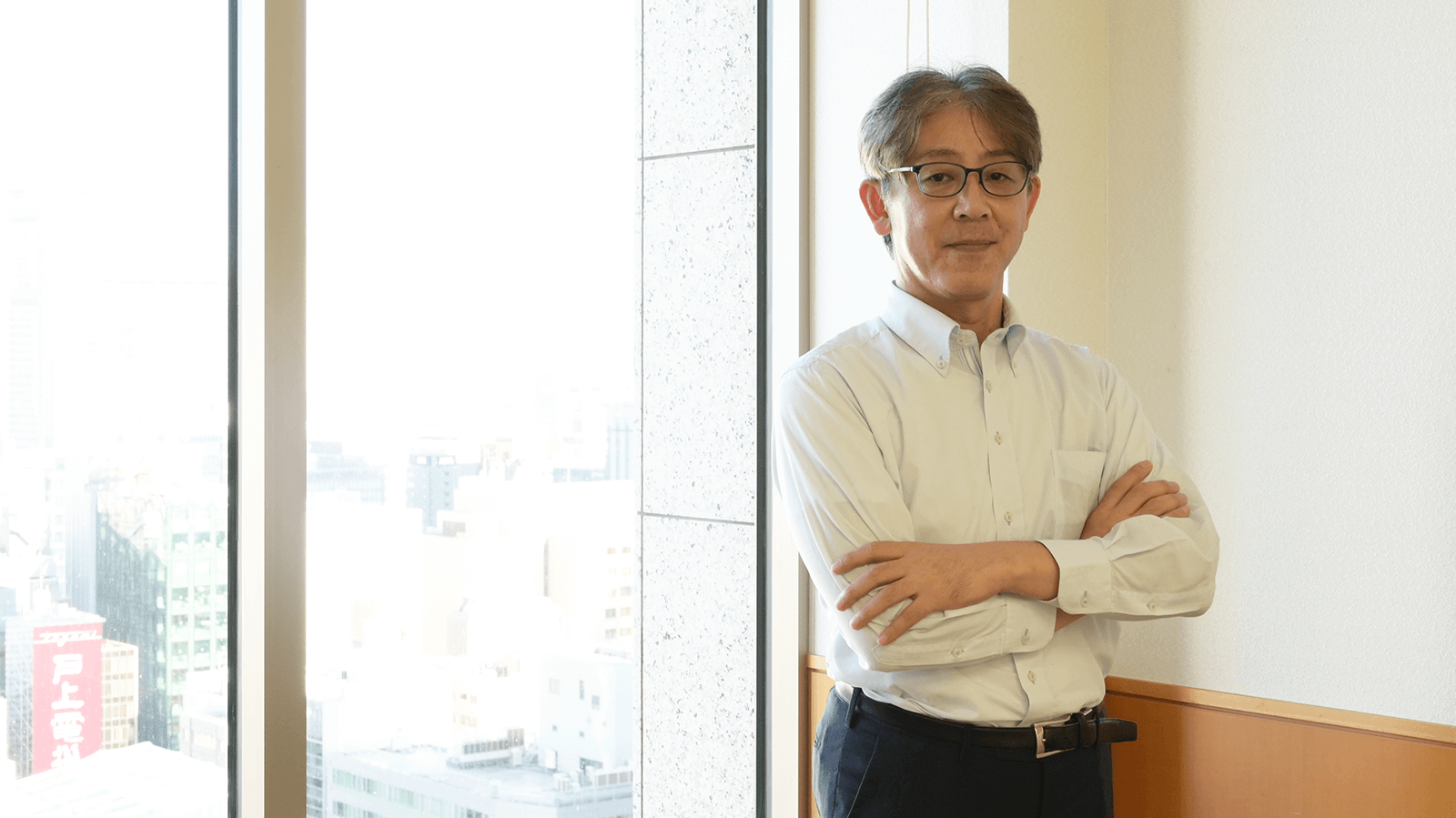
In order to understand the true significance of the University of Tsukuba and F1000Research partnering on the first open research publishing gateway (to publish in either English or Japanese), it is necessary to understand the history of scholarly publishing and get a clear view of the various challenges facing the industry today. We asked Japan’s leading expert in academic information distribution technologies, Kazuhiro Hayashi, who is engaged in the development and implementation of a future-focused open science policy for Japan’s overall science and technology policy, to explain F1000’s role and his future vision of scholarly publishing.
17th century: from letters to journals
To explain what F1000Research is and what significance the platform has in the history of scholarly publication, I need to give you a brief introduction to the history of the academic journal.
The history of the modern academic journal dates back to the 17th century. One of the world’s oldest journals was Philosophical Transactions, which was first published in England in 1665. During this period, similar journals were created in France and Italy. Before that, books provided the only means for publishing one’s research, but to publish a book took a long time. The researchers of the time, in order to communicate their discoveries to others and leave a record claiming “This was my discovery!” before anyone else could take credit, wrote letters to each other. But, since a letter could be sent to only one person at a time, they had to send out many letters. The journal was born when someone had the idea of collecting these letters in one place and publishing them together. Even today, journal articles announcing breaking research-related news are referred to as “letters” or “communications.”
The next problem was monitoring the quality of the discoveries to be published in a journal. For that, someone had the idea of having other researchers in the same field check them before publication—and the peer review mechanism was born. This was the beginning of the academic journal culture of publishing studies only if the procedures and scientific validity meet certain standards and the information from the study is of high academic value. Given that information that is valuable and rare is a good commodity on which to base a business, before long, commercial publishers entered the game. Gradually, they assumed the role of the academic community and turned scholarly publishing into a business.
In other words, the history of scholarly publishing is the history of how technology has supported and optimized researchers’ interest in delivering their discoveries to more people as quickly and accurately as possible by increasing the value of published research and commercializing it. However, from the 17th through the 20th centuries, further innovation in the industry was limited to technological developments in papermaking, printing, and mailing.
The next real paradigm shift took place around 330 years after the inception of the journal, when the dissemination of information at universities via the internet began in the 1990s. We are now at the dawn of a transitional period for information distribution in which paper- and mail-based infrastructure is being replaced by completely new online platforms. Let’s take a closer look at what happened during the last 30 years to bring us to where we are today.

1990s-2000s: e-journals, preprinting, and the open access era
It is very difficult to say what constituted the start of the electronic journal, or e-journal. However, in the sense of the first journal that provided access to full-text articles in HTML, which could be considered the prototype for today’s e-journals, in 1995, the Journal of Biological Chemistry was digitized and the journal began providing full-text articles electronically. In the 10 years that followed, enormous progress was made in digitizing all of the journals that had been previously published using paper. As digitalization progressed, the physical restrictions related to the use of paper and mail services were eliminated and the internet created such economies of scale that everyone was able to access an enormous amount of research data. Commercial publishers who took notice at the time accelerated their sales of comprehensive package contracts for access to all the titles for which they owned the copyright, a model referred to as the “Big Deal.”
Today, researchers can access more than 3,000 journals at any time from any place.
However, the Big Deal created a new problem. Subscription-related costs soared with the new package deals. Market principles related to price setting do not work for research papers because they are scarce commodities for which there are no substitutes. Since commercial publishers are for-profit businesses, they, naturally, raise their prices to increase their profitability. As a result, along with increasing the number of e-journals in a package, they increased the package prices that university libraries were paying year after year until the libraries were no longer able to afford to pay them and began to terminate their contracts. The number of cases where the library gave up part of a subscription or cancelled the contract entirely increased, even at well-known universities in Europe and the U.S.
This issue increased frustration in academia; even before the advent of the internet and electronic publishing, publishers’ unfair copyright policies and pricing robbed researchers of their access to other researchers’ work and impeded their research. But in 1991, a new medium for information dissemination, called “preprint publication by preprint server,” appeared in the field of physics. The role of the preprint server is, to put it simply, to get a study published as quickly as possible by publishing it on the web while it is still at the draft (preprint) stage. Anyone can share their findings at any time without incurring publishing costs and be able to solicit feedback from colleagues while maintaining the right to be credited for an idea or finding. The physics community that initiated this approach simultaneously sent their work to peer-reviewed journals. Then, in 1995, a UK-based scientist, Stevan Harnad, sugegsted that preprints be used to boycott the publishing companies. In his famous “Subversive Proposal,” he called on researchers to rebel against commercial publishers, saying that if all researchers published their papers on their own servers, it could run the publishers out of business and end their dominance.
At the same time, the view that the over-commercialization of scholarly work was a problem developed into an opposition movement. Critics felt it was wrong that research papers could only be read by people who paid a subscription fee to a private publishing company despite the fact that research papers produced with the support of public funding are public property and should be shared with the public. Researchers convened an international conference in Budapest, which resulted in the announcement of the Budapest Open Access Initiative (BOAI), which declared that scholarship should be freely shared and should be available for use by anyone at no charge. The so-called Budapest Statement advocated for open access to all research literature.
In the early 2000s, commercial publishers and academic societies opposed open access policies believing they were not commercially viable and could not assure the quality of research. However, following the launch of BioMed Central in 2000, PLOS launched PLOS ONE in 2006, an open access mega-journal, which had an initial impact factor of 4. It was also a commercial success. The challenge for open access publishers (including PLOS) was to change their business model to one in which they collected an article processing charge (APC) from the author. At the time, this success was unprecedented. It showed that open access journals could be commercially viable and could ensure the quality of the studies that were published well enough to obtain high impact factors.
Seeing this success, other commercial publishers joined in and starting launching open access journals in quick succession. They had already increased their subscription fees to the point that libraries could no longer afford them. Moreover, while there was a limit to the number of articles that could be published in a traditional paper journal, there was no limit to publications in an open access journal. Collecting the article processing charges (APC) from that many more researchers would ensure profitability. In other words, more open access journals meant more revenue for the publisher. Commercial publishers flocked into open access publishing and, by the early 2010s, the OA/APC business model was well established. In addition, in 2018, a consortium of 11 European national research funding agencies launched the Plan S initiative, which is expected to accelerate the conversion of journals to open access globally, by mandating that all research they fund be promptly published on an open access platform beginning January 1, 2020 (now revised to 2021).

The 21st century: attempts to resolve the issues related to peer review
Although considerable progress was made in journal digitization and the development of open access journals in the 20 years between 1990 and 2010, these changes only replaced the paper-based publishing system from the 17th century with a digital one. New issues centered around peer review emerged, and addressing these would require reforming the publishing process.
The existing peer review system is considered an indispensable mechanism for ensuring the quality of studies before publication. However, there are four broad issues with the existing system that need to be addressed: (1) getting an article published takes too long; (2) there is potential for publishing bias in favor of articles that will “sell well”; (3) the peer review process takes place behind closed doors, so it lacks transparency; and (4) the system makes it difficult to recognize the contributions of volunteers who spend their time reviewing articles for the publisher.
In a sense, preprints have resolved the first and second issues. With preprints, completed studies can be promptly shared with others in the field. These include studies that, in the existing peer review system, might be rejected. However, now researchers are faced with the problem of being overwhelmed by the vast number of papers of varying quality, and not knowing which can be trusted.
Subsequently, Faculty of 1000 (F1000) emerged as a publishing platform with the objective of resolving all four issues. The underlying idea was to take the conventional peer review mechanism one step further by proposing new methods for controlling the quality of published research. First, under a service called F1000 Experts, experts evaluated the quality of studies that had already been published and offered information that could add value to a study. Then, in a further development, a platform named F1000Research was launched. This allowed preprints (articles in draft form) to be published promptly and be subjected to peer review.This reduced the time it took to publish a study, prevented publishing bias, and subjected the study to open review, which increased the transparency of the review process because the names of the reviewers were displayed and their comments could be cited. In other words, F1000Research is attempting to change way scholarly literature has been published over the 350 years since the 17th century.

The future: a world of researcher-YouTubers
Although the F1000Research initiative is both challenging and pioneering, we are only at the very beginning of a transitional period which will tell whether scholarly publishing will break free from its 17th-century traditions. In my opinion, we have a long way to go before this solution helps break away from the traditional journal-based system. My point may be easier to understand if we look at the television industry. Publishing companies and journals are in the same kind of position as television production companies. With the spread of the internet, internet TV and video streaming services have been introduced, but television is still, for the most part, a type of mass media. Internet TV has kept the mass media culture and just replaced the technology it uses with a new one—the internet. On the other hand, YouTube’s momentous success as a video-based social networking system that is user-driven by digital natives has significantly changed ideas regarding video production, distribution, and entertainment. You could say that F1000 is still in a position like internet TV. However, since there is no platform like YouTube in the scholarly publishing industry for publishing the results of research conducted by digital natives, and because the researcher equivalent of the YouTuber has not been born yet, I think F1000Research is a promising platform to use in order to see how much it can get users involved in its operation and make it an innovation in the same league as YouTube.
From a broader perspective, despite technological advances such as AI, big data, and blockchain, both the publishing system and the old laws regarding information distribution like copyrights need to be updated. If our approach to technology changes, but the social systems, including its laws, do not change accordingly, true digital transformation will not take place. In other words, a lot of work remains to be done. In the future I envision, even the framework for academic publishing will have been done away with. It will be a world where researchers are paid a fee, for example, for research data that will be shared real-time with people who need it, researchers will be appropriately evaluated, and their reputations will be based on the distribution of their research data. The belief that this will happen in around 50 years keeps me active in this field. Even if I am not around physically, I will be watching from the other side [laughs].
In any case, I think that F1000 is a pioneering company that will strike a good balance between the ideal and the practical in the creation of a new publishing culture. I also think it would be wonderful if, as a result of the University of Tsukuba’s endeavor with F1000, new ways to share research results to make them publicly available will be created, and if those developments give life to new types of researchers and carve out a new world for research.
Kazuhiro Hayashi
Senior researcher at the Science and Technology Foresight Center of the National Institute of Science and Technology Policy (NISTEP) for the Ministry of Education, Culture, Sports, Science and Technology.
Hayashi was accepted into the doctoral program for chemistry in the University of Tokyo’s Graduate School of Science. At the Chemical Society of Japan (CSJ), starting in 1995, he was engaged in the digitization of their English language journals and in the implementation of the CSJ’s responses to the roll-out of the DOI in 2002, and the roll-out of open access in 2005. To make use of his knowledge and experience with scientific findings and technology, he worked on projects to make the dissemination abroad of information originating in Japan more appealing through organizations such as the Science Council of Japan and the International Scholarly Communication Initiative (SPARC Japan). He is interested in the future of the ways scholarly information is distributed and in how the next generation of researchers should communicate. Since 2012 he has been engaged in policy science research at NISTEP. Currently, his international work toward the formulation and implementation of policies concerning open science has included acting as an expert committee member on open science for UNESCO, the OECD, and the G7 Science and Technology Ministers’ Meeting. In Japan, he has been involved in a broad range of activities, for example, acting as a specially appointed committee member for the Science Council of Japan and as the deputy chief examiner for the Cabinet Office’s Research Data Infrastructure Development and International Expansion Working Group. He is a founding member of the Research Data Utilization Forum and the Japan Open Science Summit.
No End or Waste in Research ─Enabling an evolving, living publication ecosystem

When we spoke to the faculty members of the University of Tsukuba about its partnership with F1000Research, they were all praise for its Managing Director, Rebecca Lawrence. “She has the vision and a great smile that made us believe that the future is bright!” is how most people described her. They gave her credit for understanding the needs of the university and realizing this partnership. In this interview, Rebecca Lawrence, the driving force behind F1000 Research Ltd., talks about how she wants to change the traditional publishing model and her vision for the future of research publication, the partnership with the University of Tsukuba, the acquisition by Taylor & Francis, and more.
F1000 and its philosophy
F1000 was founded in 2002 by Vitek Tracz. It was originally called Faculty of 1000, a reference to the group of 1000 biomedical researchers whose recommendations were used to identify papers of note. Vitek is widely considered the “father of open access.” He founded the Current Opinion journals and the publisher BioMed Central. Current Opinion journals provided short annual reviews of key topics and asked authors to also flag those citations that were seminal contributions, while BioMed Central pioneered open access publishing. Both initiatives were at the forefront of scholarly publishing in their time and aimed to change the scholarly system for the better.
F1000 was founded with the same vision. By 2000, with the volume of publications skyrocketing, it became difficult for readers to wade through articles to find those of most relevance. Also, the journal impact factor was increasingly considered the sole indicator of the quality of research output. F1000 provided an alternative to the journal impact factor; it aimed to highlight high-quality research that was not necessarily published in the top impact factor journals.
Inspired by Vitek’s vision, I joined F1000 in 2009. In my former line of work focusing on publishing solutions for the pharmaceutical industry, the latest new research is typically first presented as posters at major conferences. The pharmaceutical industry is especially keen to know the latest discoveries and so they often invest significant time and funds in scanning research conferences looking at posters. In addition, a large proportion of this research is never published, so you will never be able to access it again after a conference if you weren’t able to attend at the time.
In response, in 2010, Vitek and I launched F1000Posters to enable researchers to openly and freely share their conference posters and slides. In 2013, this evolved into F1000Research, the innovative open research publishing arm of F1000 that offers immediate publication and transparent peer review.

Tackling issues beyond open access
At F1000Research, we are trying to tackle five main issues plaguing research dissemination in traditional publications.
The first is the time taken from submission to publication. It takes months, sometimes years, from the time a researcher has discovered something to when others get to see it.
Then there’s usually a lack of access to the research data that underpin the findings. The data is the core of the research. It just seems crazy to me that you publish a summary of your output and that reviewers are expected to peer review your work without access to the core of the work.
Lack of transparency in the peer review process is another significant issue. In traditional journals, the peer review process is often closed. Most journals follow the single blind peer review process, where you don’t know who the reviewers are or why the decision to publish (or reject) was made. That leads to a number of biases in the system.
We’re also trying to address the lack of visibility of the peer reviewer’s contribution. Peer review is voluntary work and, in most cases, the names of peer reviewers are not disclosed. As a result, they do not get credit for their contribution. Often reviewers co-author their reviews with more junior colleagues for training, and I feel that those junior researchers should also get credit for their work.
Then there’s publication bias and research waste. Many journals only publish certain types of articles or articles they think are interesting or will ultimately bring citations, and because of this, many findings don’t get communicated.Negative and null research findings and replication/ refutation studies are rarely published. Even though the results in each of these studies may be small, together they might be really significant and need to be published. Such publication bias leads to a huge amount of research waste. Sir Iain Chalmers suggested that in clinical research, about 85% of research is wasted one way or another, which is an enormous waste of money, time, and effort.
The solution to these problems is to put control in the hands of researchers at every stage of the publication process and that’s what we are trying to do at F1000 Research. We combine the benefits of the preprint server with those of the traditional journal—thus creating an author-driven model. We want to allow researchers to share any aspect of their research straightaway and make their research available quickly, and ensure that the underpinning data is made findable, accessible, interoperable, and reusable (FAIR).
Let me break down this model for you: We don’t have external editors who decide whether to accept or reject a paper – we simply conduct a rigorous but objective set of checks for things such as plagiarism, ethics, meeting community reporting guidelines, and making the data FAIR. We encourage the publication of a wide range of research papers, from traditional narrative papers to software tools, data notes, method articles, and more. Peer reviews are then openly shared with everyone and reviewers are named, and then the authors get to decide when and how they want to respond to reviewers and if they want to update their article to provide a new version. Getting a paper published should not be the last step. Authors can keep improving their paper until they are ready to stop, but they can always come back later to update it again if they wish. It is an evolving, living publication.
We are trying to bring about a paradigm shift in the way research is published and evaluated: we want to give readers access to all the important information, including the expert assessment, and let them take an informed decision on whether the paper is valuable to them.

Partnering with the University of Tsukuba
When I met Professor Jun Ikeda from the University of Tsukuba’s Faculty of Humanities and Social Sciences and his team, it was clear that they share the same vision as we do at F1000 Research. They are very keen on changing the research evaluation system and, in particular, how to bring open research concepts to the humanities and social sciences, which is also an area we are now focusing on, having started in the life sciences. We realized that we could work together to help them achieve their goals.
The contemporary research ecosystem is very complex. Everything is interrelated— researcher assessment, promotion, tenure, and university rankings. We can’t just change one aspect without changing the whole system. I believe that institutions, along with funders, have the strongest influence in this area. But frustratingly, everyone seems to be waiting for the others to make a move.
This is why we have been partnering recently with a number of leading research funders around the world, providing them with open research publishing solutions for their grantees. These include Wellcome Open Research, Gates Open Research, and most recently, Open Research Europe for EC Horizon 2020 grantees. The University of Tsukuba is the first research institution that has taken this bold first step. We want to see if this partnership and any initiative that comes out of it will encourage other universities in Japan and beyond to join in the movement toward open science.
A unique feature of the platform that we have developed for the University of Tsukuba is that it will enable researchers to publish their research in Japanese. Providing multi-language support was not part of our vision initially, but it was a need highlighted by the university’s humanities researchers. They wanted to publish humanities and social sciences in Japanese, have them indexed in global research databases, and make them accessible to anyone. It’s a big ask from the perspective of coordination and quality control, so this is probably why no other big publisher offers this. It’s quite complex and not technically straightforward. But we are a small team and we can make decisions faster. We thought, if it is so important to them, why not try and make it work?
What we’re doing with the University of Tsukuba has garnered a lot of interest in Asia and beyond and so multilanguage publication is something we’re now looking at much more broadly. This also fits well with our ethos of ensuring that scholarly publishing really meets the needs of the research community.
I think that initiatives like this will give institutions, research funders, and other players more of a say in the publishing process. We want to collaborate with these key actors in the scholarly ecosystem to support them and their researchers in a transition to open research practices, and work together to observe, understand, and then address the challenges.

Acquisition by Taylor & Francis and synergy
We started to reach a point where a small team simply couldn’t make the kind of impact Vitek and I had envisioned. But with Taylor & Francis acquiring F1000 Research Ltd. at the start of 2020, we now have the support, resource, and expertise to really drive our vision.
Taylor & Francis’s CEO Annie Callanan and her executive leadership team are committed to open research and changing the system. They also have a very strong humanities and social sciences base through Routledge, which we are already starting to leverage.
It’s been some 11 months since we joined Taylor & Francis and it’s been very exciting to be part of such a big organization that really sees open research as the direction the industry should take.
We are helping Taylor & Francis explore more in the avenue of open research publishing and we hope this will encourage other publishing companies to follow suit. Together, we can change the system much faster. At F1000Research, we’ve demonstrated that this model works, and have shown how major funders are shifting, and reaping the rewards of this model. Now we need publishers and research institutions to come together to make the real shift.

Looking ahead—more solutions in the offing
Another crucial area we are working on with the broader community is around addressing issues with research assessment. We’re trying to deviate from the traditional model where the authors have to select one journal to publish in. We also don’t want to replace this with many platforms. Since many studies are funded by multiple entities, authors will have to choose between platforms and we want to avoid that.So we’re trying to create a middle ground where authors can publish on an open platform and still get peer review, recognition, and citations.
Together with representatives of a broad group of stakeholders, we’re working toward creating a central platform (Open Research Central) where the venue of publication will not matter. This platform will connect publishers, funders, research communities, and societies in one place where authors will be able to choose from a range of services to get their research outputs published and then openly peer reviewed.
We think crucial to success of this approach is separating the process of publication and technical peer review from the curation and evaluation of a findings’ potential impact. Imagine if a researcher submits his/her paper to a central publishing platform and it undergoes technical peer review from one of the available services. After that, multiple groups (could be journal editors or through scholarly societies) assess the paper to see if it meets their minimum criteria for perceived importance or impact, and give a badge that endorses the quality of the paper—a bit like the different star ratings for restaurants. Papers can then gain greater standing as time progresses rather than be published in a single venue and therefore only be assigned the reflected value of that venue.
At the same time, we are starting to publish types of output, not just research papers. We’ve always said that researchers should be able to publish articles in whatever format is most relevant, whatever that output is. There are many outputs of research that don’t warrant peer review (or may need a different type of peer review) that are also valuable to the community but are typically hard to share and make citable and to track impact. These might be whitepapers, technical reports, teaching materials, etc., as well as conference posters and slides. By publishing these outputs, we will be able to track their performance and enable their citation. If it is trackable, any research output could be reflected in a researcher’s assessment.
Rebecca Lawrence
Rebecca is the Managing Director of F1000 Research Ltd.
After acquiring a degree in Pharmacy from the University of Wales, Cardiff, and a PhD in Cardiovascular Pharmacology from University of Nottingham, Rebecca joined Elsevier where she oversaw publications and new products in the Drug Discovery Today group. She then served as the Editorial Director of Current BioData Ltd. In 2009, she joined F1000 where she launched F1000 Posters (an Open Access repository of posters and slides) and was responsible for building and managing external partnerships. She launched the open research publishing platform F1000Research in 2013. Rebecca has been an active member of the Open Science Policy Platform, a group that advises the European Commission on open research policies, and a member of the Advisory Board of DORA (San Francisco Declaration on Research Assessment).

